The Man With the Clipboard: How Site Superintendents Build America Before the Blueprints Catch Up

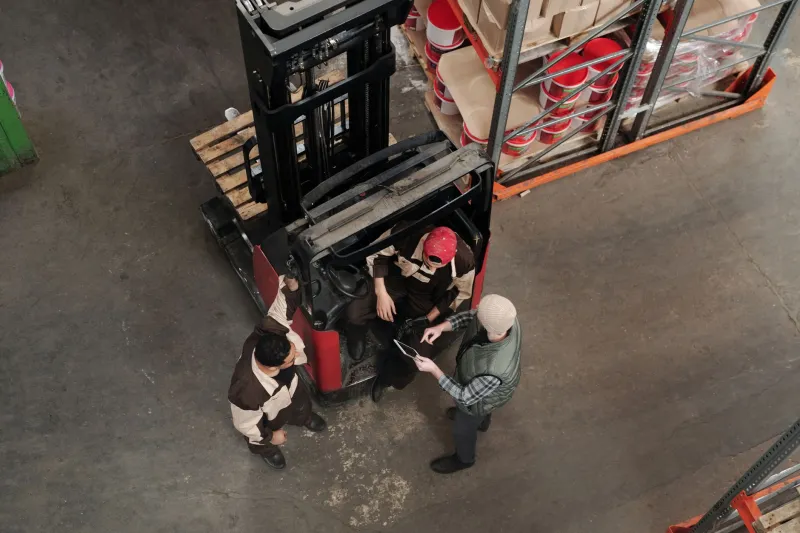
The architect's rendering is immaculate. Clean lines, precise dimensions, a color palette that photographs beautifully. What the rendering does not show is the eighteen-inch discrepancy in the existing slab, the subcontractor who arrived two hours late with half the crew, or the underground utility that the survey missed by thirty feet. Those problems belong to someone else entirely — the site superintendent standing in the mud at six-thirty in the morning, coffee in one hand, clipboard in the other, already working through solutions before the design team has opened their laptops.
In America's construction industry, site superintendents occupy a position that is simultaneously indispensable and underappreciated. They are the operational core of every project, the professionals who translate abstract drawings into physical structures, and the individuals who absorb the chaos that exists between what was planned and what is actually possible. Understanding what they do — and how they do it — reveals something essential about how buildings actually get built in this country.
Between the Drawing and the Dirt
A set of construction documents represents the best thinking of engineers and architects working in controlled environments with access to surveys, soil reports, and building codes. What those documents cannot fully account for is the condition of the real world on a specific plot of land on a specific morning in a specific season.
Site superintendents are the professionals who reconcile that gap. When a structural beam doesn't clear a mechanical duct as specified, the superintendent identifies the conflict, consults with the relevant subcontractors, and often proposes a field solution — all before formally notifying the engineering team. When weather delays concrete placement and threatens to disrupt a sequenced pour, the superintendent recalculates the schedule, adjusts labor assignments, and communicates revised timelines to everyone downstream. These are not minor administrative tasks. They are consequential decisions that affect structural integrity, project cost, and delivery dates.
Dave Kowalski, a superintendent with more than two decades on commercial projects across the Midwest, describes his role plainly. "The drawings tell you what to build. They don't tell you how to build it in the real world. That part is on me."
Managing the Orchestra of Subcontractors
On any given commercial project, a site superintendent may be coordinating a dozen or more subcontractors simultaneously — concrete crews, ironworkers, electricians, plumbers, HVAC installers, glaziers, and others, each operating on their own schedule and with their own set of priorities. The superintendent does not simply observe this activity. He or she sequences it, arbitrates conflicts between trades, enforces safety protocols, and ensures that no single crew's progress becomes another crew's obstacle.
This coordination demands a command of multiple disciplines that few other roles in construction require. A superintendent who does not understand the sequence of mechanical rough-in relative to framing will allow work to proceed in an order that forces costly rework. One who cannot read structural drawings fluently will miss field conditions that compromise load-bearing elements. The knowledge base required is not theoretical — it is earned through years of direct, hands-on exposure to the way buildings actually come together.
That experience is precisely what makes experienced superintendents so difficult to replace and so valuable to the firms that employ them. No software platform, however sophisticated, currently replicates the situational judgment of a veteran superintendent who has seen a similar problem on three previous projects and knows which solution held and which one failed.
Making Calls Before the Phone Rings
One of the less visible aspects of the superintendent's role is the speed at which decisions must be made. Construction sites operate in real time. A crew standing idle costs money by the hour. A decision delayed by a day can cascade into a week of schedule slippage. Superintendents frequently make judgment calls — adjusting dimensions within tolerance, approving substitutions for unavailable materials, redirecting labor to maintain momentum — before formal approval channels have been activated.
This is not a circumvention of process. It is a recognition that the project's forward motion depends on someone with sufficient authority and knowledge being present and empowered to act. The best superintendents understand exactly where the boundaries of their discretion lie, and they operate confidently within them while flagging anything that requires escalation to the project manager or design team.
The risk of getting this wrong is substantial. A field modification that seems reasonable in the moment but conflicts with a structural or code requirement can create problems that are expensive to remediate and, in the worst cases, dangerous. The superintendent's judgment is not infallible — it is, however, the first and most immediate line of defense against errors compounding in the field.
The Schedule Is the Product
In commercial construction, delivering on time is not a courtesy — it is a contractual and financial obligation. Tenants have signed leases. Lenders have structured financing around completion dates. Municipalities have issued permits with expiration windows. The site superintendent is the primary keeper of the project schedule at the field level, tracking daily progress against the master plan and identifying threats to completion dates before they become irreversible.
This requires a particular kind of forward thinking. A superintendent who is only managing today's work is already behind. The best in the field are simultaneously aware of what is happening on-site right now, what needs to be staged and ready for next week, and what procurement or coordination issues three months out could derail a critical path activity if not addressed immediately.
Large general contractors often invest significantly in scheduling software and project management systems, and those tools are genuinely useful. But the superintendent is the professional who translates the schedule from a digital document into a daily operational reality — assigning crews, confirming material deliveries, adjusting sequences, and holding subcontractors accountable to commitments.
The Knowledge That Cannot Be Designed
There is a persistent tendency in American industry to treat technology and process as the primary drivers of quality and efficiency, with human judgment occupying a secondary role. Construction sites complicate that assumption in important ways. The physical world does not behave with the consistency of a software environment. Soil conditions vary. Materials arrive with imperfections. Weather intervenes. Human error occurs. Each of these variables requires a response that is proportionate, informed, and timely.
Site superintendents are the professionals equipped to provide that response. Their value is not in executing a predefined plan — it is in maintaining progress when the plan meets reality and reality wins. The structures that define American cities and communities — hospitals, schools, office towers, bridges, warehouses — were built not just by the engineers who designed them, but by the men and women who stood on the ground and made the thousand decisions that the drawings never anticipated.
The clipboard is not a symbol of administrative burden. It is a record of the real-world problem-solving that turns engineered intentions into finished buildings. And the person holding it, more often than not, is the reason the project gets done at all.