The Floor Knows First: Why Distribution Centers Are Handing Layout Decisions Back to the People Who Walk Them
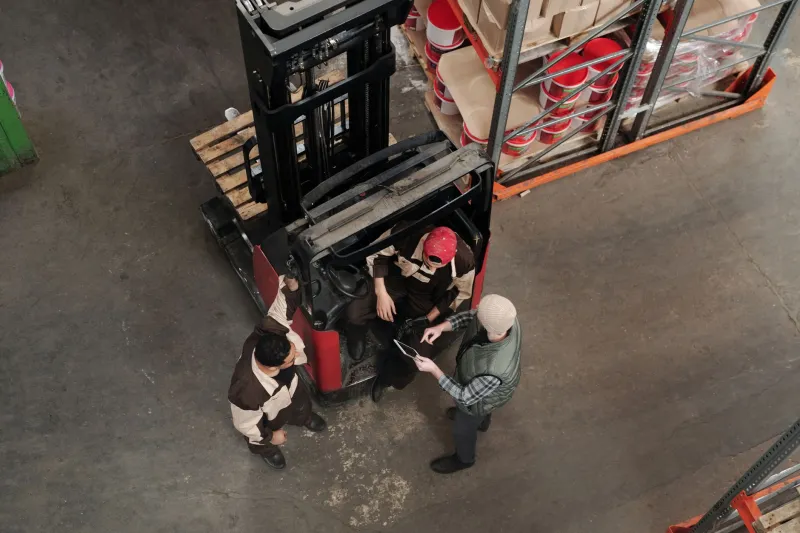
There is a particular kind of knowledge that cannot be captured in a spreadsheet. It lives in the body — in the muscle memory of a forklift operator who has spent three years navigating the same aisle, in the instincts of a pick-and-pack associate who knows exactly which corner slows every new hire down. It is operational intelligence in its most raw and reliable form, and for too long, American distribution centers have been leaving it on the floor.
That is beginning to change.
A growing number of warehousing and logistics operations across the country are rethinking who sits at the table when facility layouts are designed or redesigned. Rather than relying exclusively on outside consultants armed with simulation software and generalized industry benchmarks, these companies are inviting their ground-level crews into the planning process — and discovering that the return on that decision is measurable, immediate, and substantial.
The Consultant's Blind Spot
The conventional approach to warehouse design follows a familiar sequence. A third-party firm is engaged, data is gathered, a floor plan is produced, and the facility is reorganized accordingly. The process is methodical. It is also, in many cases, incomplete.
Consultants work from aggregate data and industry standards. What they cannot easily account for is the granular, site-specific behavior of a particular workforce operating in a particular building with particular inventory. They do not know that the southwest aisle floods slightly when it rains and becomes a hazard near the floor drain. They have not noticed that the staging area near Dock 4 creates a predictable bottleneck every Tuesday when the regional carrier arrives two hours early. They cannot feel the cumulative strain of a layout that forces pickers to turn their bodies the same direction three hundred times per shift.
Workers know all of this. They have known it for years. The question is whether anyone asks.
What Happens When Companies Actually Listen
The logistics industry has a long tradition of top-down decision-making, and breaking from that tradition requires more than good intentions. It requires structured mechanisms for capturing and acting on ground-level input.
Some organizations have introduced what are informally called "floor review sessions" — facilitated conversations in which frontline employees walk supervisors and operations managers through the facility and identify friction points in real time. Others have implemented anonymous suggestion systems specifically tied to layout and workflow, separating those submissions from general HR feedback channels to signal that operational ideas are taken seriously.
The outcomes reported by companies that have committed to these approaches are difficult to dismiss. Injury rates tied to repetitive motion and awkward maneuvering have declined in facilities where workers flagged ergonomic problem areas that had not appeared in any formal audit. Pick-path efficiency has improved when associates recommended repositioning high-velocity SKUs based on daily observation rather than quarterly sales data alone. Dock congestion has eased after drivers and receiving crews described sequencing problems that no simulation had modeled.
In several documented cases, the cost of implementing a worker-suggested layout change was a fraction of what a full consultant-led redesign would have required — and the results were faster and more durable because the people who proposed the changes were also the people responsible for maintaining them.
The Ergonomics Argument
Beyond efficiency, there is a safety dimension to this conversation that deserves direct attention. Musculoskeletal injuries remain among the most common and costly claims in the warehousing sector. The Bureau of Labor Statistics consistently identifies warehousing and storage as one of the higher-risk industries for nonfatal occupational injuries, with overexertion and repetitive motion among the leading causes.
Many of those injuries are not random. They are the predictable product of layouts that were designed without adequate input from the people performing the physical work. An aisle that is two feet too narrow for the turning radius of a loaded pallet jack. A pick station positioned at a height that serves the median worker in a dataset but strains a significant portion of the actual crew. A return-flow path that adds forty steps per cycle because no one asked the associates which route they naturally preferred.
When workers are given the opportunity to identify these conditions before they become injury events, companies benefit in ways that extend well beyond the immediate safety improvement. Workers' compensation costs decline. Turnover — which in the warehousing sector runs high and carries significant replacement and training costs — often decreases in facilities where employees feel their physical wellbeing is taken seriously. The signal that a company sends by asking "what is hurting you about this layout" is not a small one.
Resistance and How to Address It
None of this is without friction. Operations managers who have built careers around data-driven decision-making can be understandably skeptical of a process that incorporates subjective worker feedback. There are legitimate concerns about scalability, about the potential for individual preferences to conflict with system-wide optimization, and about the time investment required to gather and synthesize ground-level input at any meaningful scale.
These concerns are worth taking seriously rather than dismissing. The most effective implementations treat worker input as one layer of a multi-source decision process, not as a replacement for quantitative analysis. Simulation data and throughput metrics remain relevant. What changes is that they are interrogated against lived experience rather than accepted in isolation.
The practical approach is to treat frontline workers as subject-matter experts in a specific domain — the physical reality of the facility — while maintaining the analytical frameworks that govern broader operational decisions. That combination, ground-level intelligence integrated with rigorous data review, produces outcomes that neither approach achieves alone.
Operational Intelligence as Competitive Advantage
The logistics industry is operating in an environment of sustained pressure. Labor costs are rising. Customer expectations around speed and accuracy are more demanding than at any prior point in the sector's history. The margin for operational waste is narrowing.
In that context, companies that continue to design facilities without the input of the people who run them are leaving a meaningful advantage unclaimed. The knowledge that accumulates on a warehouse floor over months and years is not soft data. It is a precise and detailed record of what works, what fails, and what quietly costs the operation money every single day.
The companies that are winning on the ground right now are not doing so because they have access to better consultants or more sophisticated software. In many cases, they are winning because they understood something fundamental: the most accurate map of any facility is the one carried in the minds of the workers who navigate it.
That map has always been available. It simply required someone willing to ask for it.