The Hands That Know: Why Master Equipment Operators Are Worth Every Dollar They Command
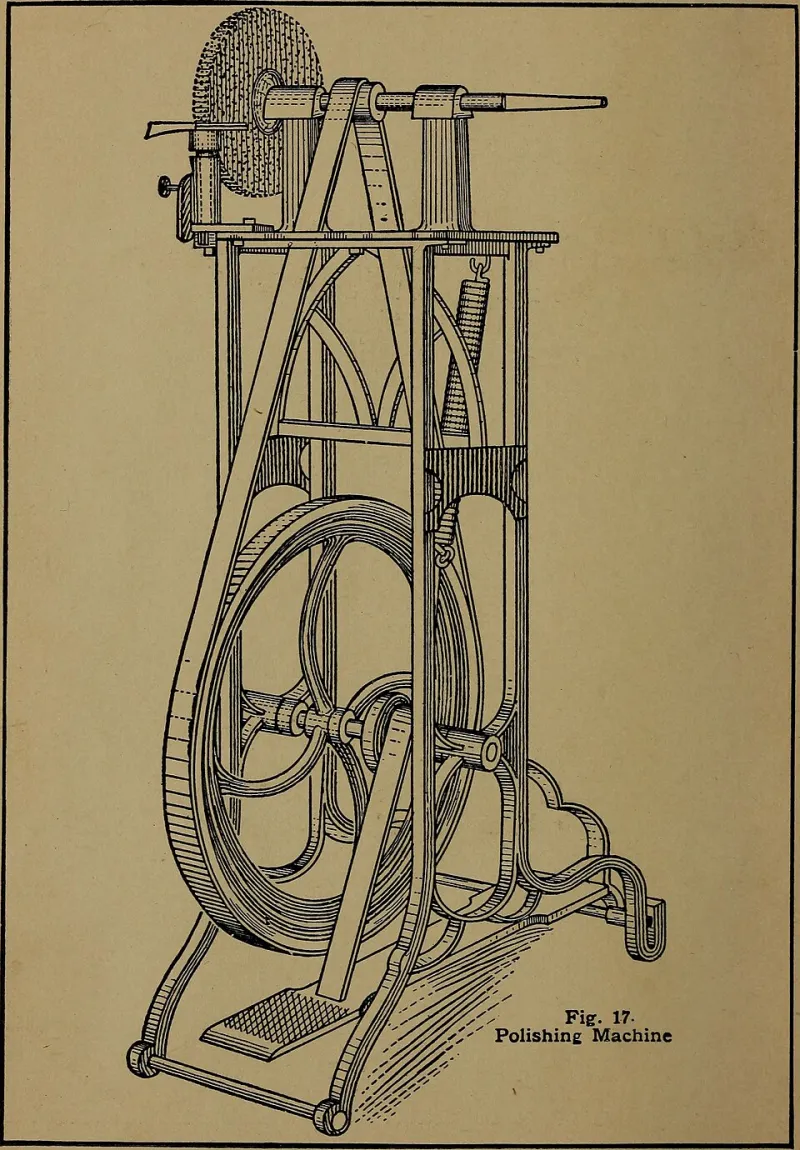
Photo: Reetz, Henry Christian, 1888-, No restrictions, via Wikimedia Commons
What Twenty Years Actually Teaches
The certification process for heavy equipment operators establishes a documented baseline. It confirms that an individual understands the controls, can perform basic operational sequences, and has been evaluated against a defined standard of competency. What it cannot document is the kind of knowledge that only accumulates through sustained repetition across varied conditions, equipment generations, and job site environments.
An operator with two decades behind the controls of a crawler crane, a large excavator, or a specialized lifting platform has encountered failures, near-misses, mechanical anomalies, and site conditions that no training curriculum anticipates. Each of those encounters deposited something—a refinement in how they read vibration through a seat, how they interpret the sound of a hydraulic system under stress, how they gauge ground bearing capacity from the way a machine settles when it comes to rest. That accumulated knowledge is not metaphorical. It is neurological. It is what the industry, with characteristic bluntness, calls feel.
Feel Is Not a Soft Concept
In conversations about skilled trades compensation, the word "feel" sometimes draws skepticism from financial analysts and procurement managers who prefer quantifiable inputs. That skepticism dissolves quickly when a senior project manager explains what it cost the last time an inexperienced operator misjudged a load swing or underestimated the effect of a soft spot in the subgrade.
Machine behavior communicates constantly. Hydraulic pressure fluctuations, track tension, counterweight response, the subtle pull of an uneven load—these signals are present in every operational cycle. A novice operator processes them consciously, cross-referencing against learned procedures. A master operator processes them below the threshold of deliberate thought. The machine's condition and the site's demands are simply known, integrated into every control input in real time.
This distinction has direct operational consequences. Master operators consistently work closer to safe capacity limits without exceeding them—because they know, with a precision that instruments alone cannot provide, exactly where those limits are. They catch developing mechanical problems before they become failures, because the machine sounds or feels different in ways that only years of familiarity make perceptible. They sequence movements with an efficiency that reduces cycle times and fuel consumption in ways that accumulate meaningfully across a long project.
The Talent Equation in a Contracting Market
The American construction and logistics industries are navigating a demographic reality that has been visible for years and has become impossible to ignore. The generation of operators who entered the trades in the 1980s and 1990s is retiring. The pipeline of replacement talent—particularly at the master-level experience tier—is inadequate to meet current demand, let alone projected growth.
This supply constraint has several consequences for how experienced operators are valued and compensated. In markets where infrastructure investment is accelerating—transportation, energy, data center construction, industrial manufacturing—the competition for operators with twenty or more years of specific equipment experience has become acute. Project owners and general contractors are encountering situations where the limiting factor on a schedule is not material availability or financing. It is the availability of a qualified operator for a specific piece of equipment.
In that environment, the wage premium commanded by master-level operators is not an artifact of union scale tables or negotiating leverage alone. It is a market signal reflecting genuine scarcity. A project that requires a specific crane configuration for a critical lift cannot substitute a less experienced operator and accept a higher risk profile. The cost of the operator is fixed. The cost of a failed lift—in equipment damage, schedule impact, liability exposure, and the human consequences that accompany serious incidents—is not.
ROI That Shows Up on the Balance Sheet
Quantifying the return on investment from deploying experienced operators requires looking beyond direct labor cost to several categories of value that are routinely underweighted.
Equipment longevity is one. Heavy machinery operated consistently within its tolerances, with smooth control inputs and attentive monitoring, lasts longer and requires less unscheduled maintenance than equipment subjected to the stresses that accumulate under less experienced handling. For an owner operating a fleet of assets valued in the millions, the difference in maintenance cost and residual value over a machine's service life is material.
Productivity is another. Cycle time differences between an experienced operator and a competent but less seasoned one may appear modest in isolation—seconds per pass, fractions of an hour per shift. Compounded across a project duration, those fractions become significant schedule advantages. In contract environments where delays trigger penalties or where early completion generates bonuses, the productivity differential carries real financial weight.
Risk reduction is the third category, and in many ways the most significant. The probability of a serious incident—a structural failure, a load drop, a ground collapse—is not uniform across experience levels. The expected cost of those events, probability-weighted, is a legitimate input into the economic case for deploying experienced operators on high-consequence work.
Passing It Forward
Beyond the immediate project economics, the industry faces a structural challenge that master operators are uniquely positioned to address: knowledge transfer. The skills that define a twenty-year operator cannot be packaged into a curriculum and delivered efficiently through a training program. They are transmitted through proximity—through the apprentice in the cab observing, asking questions, and gradually taking the controls under supervision.
Operations that recognize this invest in structured mentorship arrangements that pair experienced operators with developing talent on active job sites. The return on that investment is not immediate. It is measured in the quality of the next generation of operators who emerge from those relationships carrying forward knowledge that would otherwise retire alongside the people who hold it.
In an industry that has historically undervalued the transmission of craft knowledge, that investment is both an act of operational foresight and a form of institutional preservation. The hands that know have to teach before they stop working.