Always On, Never Easy: The Real Cost of Running 24/7 Field Services Across a Fragmented Map

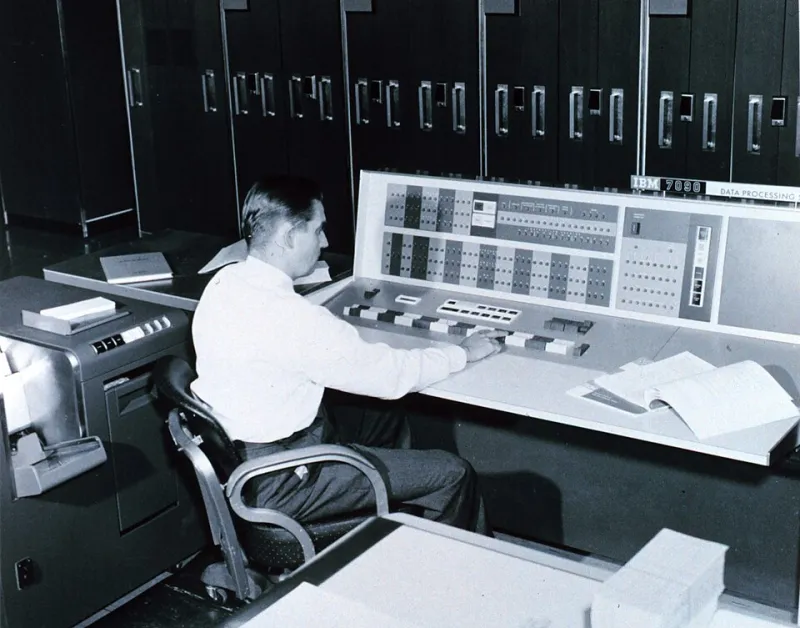
Photo: Region 5 Photography, Public domain, via Wikimedia Commons
The Gap Between the Promise and the Ground
At some point in the past decade, "available around the clock" became a standard line in service agreements across the field operations sector. Utility contractors, HVAC service providers, industrial maintenance firms, and logistics carriers all absorbed the expectation—partly driven by genuine operational necessity, partly by competitive pressure—that their capabilities extend to any hour, any day, without qualification.
The personnel managing those commitments know something that the marketing materials do not always reflect: the earth is large, the night is long, and human beings have physiological limits that no service-level agreement can override. Running genuine 24/7 field coverage across dispersed geographies is not a scheduling problem with a clean solution. It is a continuous operational negotiation between what clients expect, what crews can physically deliver, and what the geography and infrastructure of a given service area actually permit.
What Dispatchers Actually Manage
The dispatcher is the operational nerve center of any multi-shift field service organization, and the job is considerably more complex than its title suggests. At any given moment, a dispatcher managing a regional service network is tracking crew locations, monitoring fatigue hours, fielding incoming service requests, managing escalations from customers who have been waiting longer than expected, and making real-time decisions about resource allocation that ripple through the remainder of a shift.
The fatigue dimension deserves particular attention. Federal regulations govern hours-of-service for commercial drivers, and various state and industry standards impose constraints on field personnel in safety-sensitive roles. Those regulations exist for documented reasons—the correlation between fatigue and incident rates in field operations is well-established. A dispatcher who routes an exhausted technician to a late-night call to meet a response-time commitment is not solving the service problem. They are trading a customer relations issue for a safety liability.
Experienced dispatchers develop a calibrated awareness of their crew's physical state that supplements what the hours-of-service logs formally record. They know which technicians have been running hard for three consecutive days. They know which ones can push through a late call without meaningful degradation in judgment and which ones cannot. That knowledge is not documented anywhere. It lives in the dispatcher's working understanding of the people they manage, built through sustained interaction over months and years.
Geography Does Not Compress for Customer Convenience
Service area maps communicate coverage. They do not communicate drive time, road conditions, or the operational realities of dispatching a crew from a base location to the far edge of a territory at 2 a.m. on a Tuesday in February.
In markets where field service organizations have expanded their geographic footprint to remain competitive, the distance between what a coverage map implies and what response times can realistically deliver has become a significant source of customer friction. A client in a rural county that falls within the outer boundary of a service zone may have signed an agreement with response-time commitments calibrated to urban or suburban conditions. When an incident occurs at midnight in that location, the physics of the situation—road distance, crew availability, weather—may make those commitments physically impossible to honor.
The organizations managing this reality most effectively have moved toward geographic tiering in their service agreements: explicit response-time commitments differentiated by zone, with outer-territory clients receiving honest documentation of what coverage in their location actually entails. That transparency is commercially uncomfortable in a competitive sales environment. It is operationally essential, and it dramatically reduces the customer relationship damage that accumulates when expectations set in the sales process collide with ground-level constraints.
The Communication Architecture of Multi-Time-Zone Operations
For organizations running field teams across multiple time zones—a category that includes national logistics providers, large infrastructure service contractors, and multi-region utilities—the communication challenges of 24/7 operations extend beyond dispatch management into organizational coordination.
Handoffs between shift teams are among the highest-risk moments in any continuous operation. Information that is assumed to have been transmitted between an outgoing crew lead and an incoming one is frequently incomplete, compressed under the pressure of shift-end fatigue, or lost in the gap between informal communication and formal documentation. The consequences range from duplicate service calls to safety-critical information about site conditions failing to reach the team that needs it.
Organizations that have invested in structured handoff protocols—standardized documentation formats, mandatory verbal briefings for active incidents, escalation triggers that require supervisor acknowledgment rather than assumption—report measurable reductions in the errors and omissions that characterize poorly managed shift transitions. The investment is primarily procedural rather than technological, though digital platforms that enforce documentation completion before shift close have proven effective in operations where informal handoff culture had become entrenched.
Honest Capacity Management as a Competitive Differentiator
There is a counterintuitive commercial argument for operational honesty that more field service organizations are beginning to make internally: clients who receive accurate representations of service capacity and realistic response-time commitments are significantly less likely to churn than clients who were oversold and repeatedly disappointed.
The math of that argument is not complicated. A client who is told, at the point of contracting, that after-hours response in their location will take four to six hours, and who then receives a technician in five hours, has had their expectation met. A client who was promised two-hour response and waited five has had their expectation violated—regardless of the fact that the actual response time was identical. The service delivered was the same. The customer experience was not.
Building service-level agreements from the ground up—calibrating commitments to what dispatch records, crew availability data, and geographic analysis indicate is genuinely achievable—requires field operations leadership to push back against sales and commercial teams who default to competitive benchmarks rather than operational reality. That internal negotiation is difficult. It is also one of the most consequential conversations an operations leader can have.
The Human Cost of Perpetual Availability
Behind the operational and commercial considerations of 24/7 field service lies a human reality that receives insufficient attention in most operational planning discussions. The people who staff these shifts—technicians, drivers, crew leads, dispatchers—are absorbing the physical and psychological cost of perpetual availability in ways that compound over time.
Turnover in after-hours field roles is consistently higher than in standard-shift equivalents. The reasons are not difficult to identify: disrupted sleep patterns, social isolation, the psychological weight of being the person responsible when things go wrong in the middle of the night, and the cumulative fatigue of operating at the edge of capacity for extended periods. Organizations that treat their overnight and split-shift personnel as interchangeable inputs rather than as professionals whose sustainability directly affects service quality will continue to absorb the cost of that approach in recruitment, training, and the institutional knowledge that walks out the door with every departure.
The operations organizations that have built durable 24/7 service models have done so by treating the human sustainability of their field teams as a first-order design constraint—not a variable to be optimized after the service commitments are already set.