Fix It Before It Breaks: The Economics of Preventive Maintenance in Industrial America

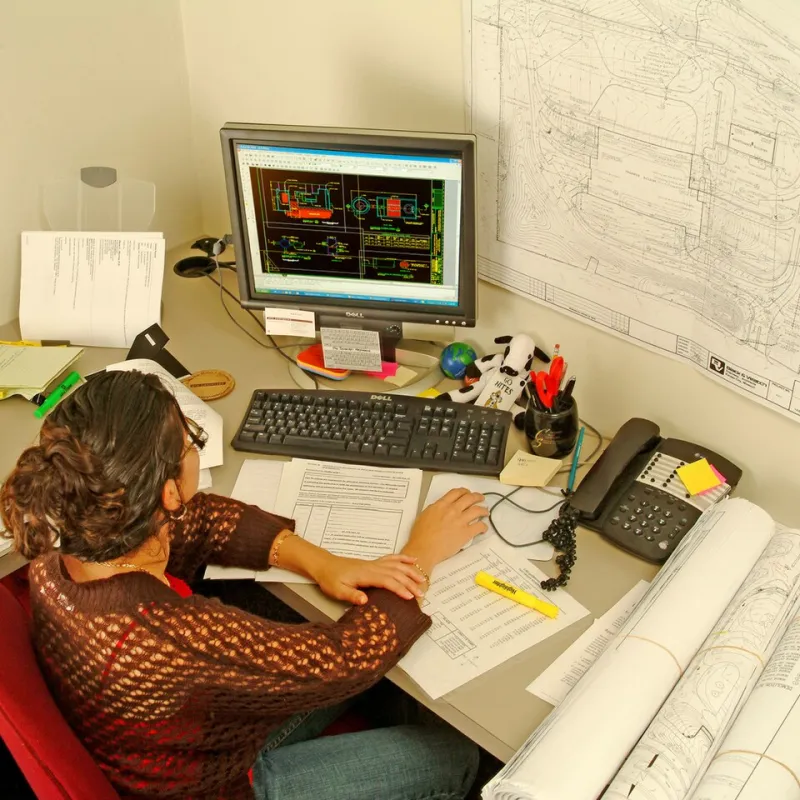
Photo: Delta News Hub, CC BY 2.0, via Wikimedia Commons
There is a particular kind of professional frustration that belongs exclusively to maintenance coordinators. They do their jobs well, and nothing happens. No alarms sound. No conveyor belts seize. No production lines go dark at two in the morning. The facility hums along, and management looks at the maintenance budget and wonders whether any of it was truly necessary.
This is the paradox at the center of preventive maintenance: success is invisible, and failure is expensive.
Across manufacturing plants, distribution centers, and processing facilities throughout the United States, ground-level maintenance teams are making the case—sometimes quietly, sometimes loudly—that the most valuable work they perform is the work nobody notices. And increasingly, the numbers are backing them up.
The Anatomy of a Breakdown
When industrial equipment fails without warning, the damage rarely stops at the machine itself. A failed bearing in a packaging line does not simply halt one station; it stalls the entire downstream operation, creates a backlog that takes hours to clear, and may trigger overtime costs across multiple shifts. If the failure involves a motor or a drive system, replacement parts may need to be expedited from a regional supplier at premium freight rates. If the machine requires a specialized technician, travel time and after-hours labor rates compound the bill further.
Maintenance coordinators who have worked through these scenarios describe a consistent pattern. The initial mechanical failure accounts for a fraction of the total cost. The operational disruption—lost production, wasted materials, labor inefficiency, potential contractual penalties—constitutes the bulk of the financial damage.
"You can almost always absorb the cost of the part," said one maintenance coordinator at a mid-sized food processing plant in the Midwest. "What you cannot absorb is the four hours of downtime on a line that runs 24/7. That is where the real number lives."
Industry benchmarks consistently suggest that emergency repairs cost between three and ten times more than the same repair performed as planned maintenance. When that ratio is applied to facilities operating continuous production schedules, the economic argument for preventive work becomes difficult to dismiss.
Pattern Recognition as a Professional Skill
The most effective preventive maintenance teams operate less like repair crews and more like diagnosticians. Their value lies not in mechanical ability alone but in the accumulation of pattern recognition—an institutional knowledge of how specific machines behave under specific conditions, and what subtle deviations from normal behavior tend to precede failure.
This expertise is developed over years on the floor. A technician who has serviced the same compressor bank for a decade develops an awareness of its rhythms that no sensor array can fully replicate. A slight change in vibration frequency, an unusual temperature variance during a routine check, a sound that does not match the expected acoustic signature—these are the early warnings that experienced crews learn to read.
Sensor technology has expanded the range of what can be detected and recorded, but the interpretation of that data still depends heavily on human judgment. Predictive maintenance platforms can flag anomalies, but they cannot always distinguish between an anomaly that demands immediate attention and one that represents normal variation. That discernment belongs to the technician who knows the machine.
"The data tells you something changed," explained a maintenance supervisor at a chemical processing facility in Texas. "It does not tell you whether that change matters. That part is still on us."
The Budget Conversation
For maintenance coordinators, one of the most persistent professional challenges is justifying preventive work to management that measures performance by costs incurred rather than costs avoided. Preventive maintenance is, by definition, a line item on a budget. The catastrophic failure it prevents does not appear on any ledger.
The most effective coordinators have learned to frame the conversation in terms that resonate with financial decision-makers. Rather than arguing that a repair is necessary, they document the failure history of similar components across the facility, calculate the average cost of an emergency repair event, and present the preventive work as a cost-certainty trade: spend a known amount now, or risk spending an unknown—and potentially much larger—amount later.
Some facilities have formalized this approach through maintenance management software that tracks repair histories, calculates mean time between failures for specific equipment, and generates projected maintenance schedules based on actual usage data. These systems give coordinators a documented basis for their recommendations and create a record that justifies expenditures over time.
The facilities that have invested most seriously in this approach report measurable results. Reduced emergency repair incidents, lower overtime labor costs, extended equipment service life, and fewer production interruptions all contribute to a return on investment that, when properly documented, tends to silence the skeptics.
The Institutional Memory Problem
One of the less-discussed vulnerabilities in industrial maintenance is what happens when experienced technicians leave. The pattern recognition, the machine-specific knowledge, the informal understanding of which components fail first and under what conditions—this expertise does not transfer automatically to a replacement hire.
Facilities that have managed this transition poorly describe a period of elevated failure rates following the departure of senior technicians. Equipment that had been quietly managed for years begins to behave unpredictably, not because the machines changed, but because the accumulated knowledge required to maintain them walked out the door.
Forward-thinking maintenance programs address this through structured knowledge capture. Experienced technicians are asked to document not just what they do, but why—what they look for during an inspection, what past failures have taught them about specific components, what the warning signs are that a routine check has identified something worth escalating.
This documentation transforms individual expertise into organizational knowledge, creating a resource that survives personnel turnover and provides newer technicians with a foundation that would otherwise take years to build.
Working When Nothing Is Wrong
Perhaps the most counterintuitive aspect of preventive maintenance is the psychological discipline it requires. Technicians are trained to fix what is broken. Preventive work asks them to intervene before anything is visibly wrong, based on schedules, data, and experience rather than obvious symptoms.
The facilities that do this best have cultivated a culture in which proactive intervention is recognized and valued rather than dismissed as unnecessary. When a maintenance team catches a failing bearing before it seizes, replaces a worn belt before it snaps, or recalibrates a sensor before it produces false readings, that work deserves acknowledgment—not because it was dramatic, but precisely because it was not.
The absence of disaster is, in industrial operations, its own form of achievement. The crews who make that absence possible are working at the ground level of operational resilience, one scheduled repair at a time.