Digging Without Destroying: The Hydrovac Specialists Mapping America's Underground Maze
Digging Without Destroying: The Hydrovac Specialists Mapping America's Underground Maze
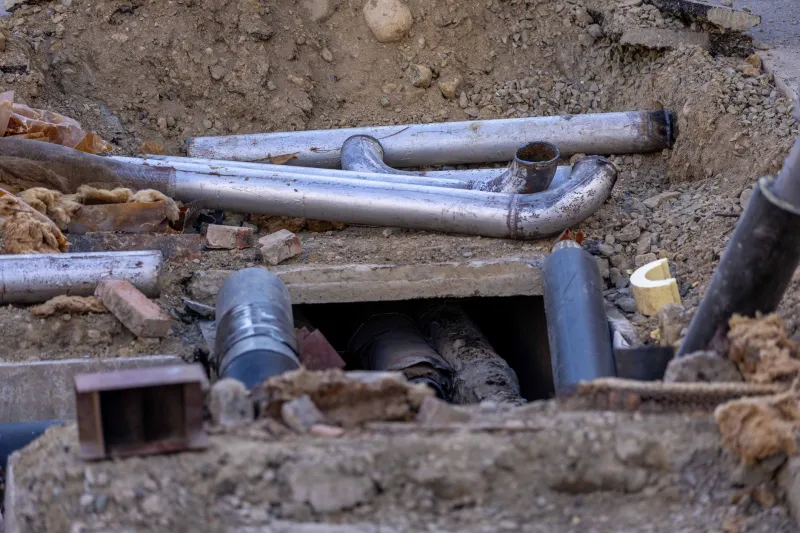
There is a city beneath the city. In Chicago, Houston, Atlanta, and virtually every major American metropolitan area, a dense, decades-old lattice of natural gas mains, fiber-optic cables, water lines, electrical conduits, and telecommunications infrastructure runs just a few feet below the pavement. Most residents never think about it. Most construction managers prefer not to think about it, either — until a backhoe operator clips a gas line and the project grinds to a halt, or worse.
That moment of catastrophic contact is precisely what hydrovac excavation crews are paid to prevent.
The Tool That Changed Underground Work
Hydrovac, short for hydro-vacuum excavation, is a method that uses a high-pressure water jet to break up soil while a concurrent industrial vacuum system extracts the resulting slurry into a debris tank mounted on the truck. The result is an excavation process that exposes buried utilities with surgical accuracy, leaving the infrastructure itself untouched and undamaged.
The technology is not new — it has been in use across North America since the 1990s — but its adoption has accelerated sharply over the past decade. As urban underground networks have grown more congested and as the cost of service disruptions has climbed into the millions of dollars per incident, contractors and municipalities alike have shifted toward non-destructive digging wherever the budget allows.
According to industry data, the North American hydrovac services market is projected to surpass $2 billion in revenue within the next several years, driven largely by infrastructure investment and tightening safety regulations. The crews operating those trucks are at the center of that expansion.
What the Work Actually Looks Like
A hydrovac operation rarely looks dramatic from the street. A large truck — sometimes called a hydrovac unit or a vac-truck — parks near the dig site. A crew of two to four workers positions the water lance over the target area and begins breaking soil. The vacuum hose draws material into the debris tank continuously. Progress is measured in inches rather than cubic yards per hour.
That deliberate pace is the point. When a crew is working within inches of a pressurized gas main or a fiber bundle carrying financial data for half the eastern seaboard, speed is the enemy. The operators who do this work develop an acute sensitivity to what the soil is telling them — how it changes texture as they approach a utility, how resistance shifts when the water jet is getting close to something it should not touch.
Veteran hydrovac operators often describe their work in terms that sound closer to surgical technique than construction labor. They are not moving dirt. They are revealing what is already there.
The Stakes of Getting It Wrong
The consequences of a utility strike are not abstract. The Pipeline and Hazardous Materials Safety Administration estimates that excavation damage is one of the leading causes of serious pipeline incidents in the United States. A ruptured gas line can trigger explosions, force neighborhood evacuations, and result in criminal liability for the contractor involved. A severed fiber-optic cable can knock out telecommunications service for entire regions. A broken water main can flood a construction site and set a project back by weeks.
Beyond the immediate physical damage, the financial exposure is substantial. Utility strike claims can run from tens of thousands to several million dollars, depending on the infrastructure involved and the downstream disruption caused. For a general contractor managing a tight-margin urban project, a single preventable strike can erase the profit on the entire job.
This calculus has made hydrovac excavation not merely a best practice but, increasingly, a contractual requirement. Many municipalities and state departments of transportation now mandate non-destructive digging methods within specified proximity to known utilities. Some insurance carriers have begun conditioning coverage on the use of hydrovac methods in high-density underground environments.
The Complexity Beneath the Surface
Part of what makes this work so technically demanding is that the underground record is rarely accurate. Utility as-built drawings — the documents that are supposed to show where everything is buried — are notoriously unreliable. Lines get rerouted during repairs. Conduits are abandoned without documentation. New installations are placed without updating legacy records. In older cities, some infrastructure predates any systematic mapping effort by decades.
Hydrovac crews often describe encountering utilities that have no business being where they are — gas lines running perpendicular to their recorded path, electrical conduits stacked directly atop water mains, fiber bundles buried at half the depth the drawings indicate. Every dig is, in some sense, an act of discovery.
This is why the human element in hydrovac operations cannot be overstated. The equipment is sophisticated, but it is the operator's judgment — developed through hundreds of hours in the field — that determines whether a dig goes cleanly or ends in an emergency call. Knowing when to slow the water pressure, when to switch to hand tools, when to stop and call for the utility locator to re-mark the site: these are decisions that no algorithm currently makes.
Growing Demand, Tight Labor Supply
The irony of the hydrovac industry's growth is that the skilled workforce to support it has not expanded at the same rate. Experienced operators are in short supply across most major markets. Companies that specialize in this work are competing aggressively for qualified crews, and training pipelines remain underdeveloped relative to demand.
This labor constraint has practical consequences for project scheduling. General contractors who wait until a dig is already in progress to call a hydrovac crew are often disappointed. Lead times for specialized hydrovac services have lengthened in many markets, particularly in regions where large-scale infrastructure investment is concentrated. Experienced project managers have learned to treat hydrovac scheduling as a critical-path item rather than an afterthought.
For the companies operating in this space, the tight labor market has created pressure to invest in training programs and to develop internal career pathways that keep skilled operators from drifting to competitors. The crews who do this work are not interchangeable, and the organizations that understand that are positioning themselves for the long term.
Precision as a Competitive Advantage
In field operations, there is a persistent temptation to treat safety-oriented processes as cost centers — necessary expenses that slow production without adding value. The hydrovac industry offers a clear rebuttal to that thinking.
A crew that exposes utilities cleanly, on schedule, and without incident is not just avoiding liability. It is enabling every subsequent phase of a project to proceed on time and on budget. It is protecting the workers who will follow them into that excavation. It is preserving infrastructure that serves millions of people who will never know the names of the people who kept it intact.
The underground city is invisible by design. The crews who work within it prefer it that way. Their best days are the ones where nothing goes wrong, nothing makes the news, and the next phase of the project begins exactly as planned. In field operations, that kind of quiet competence is the hardest to develop and the most valuable to keep.