Silent Shifts: The Field Technicians Who Keep America's Hospitals Alive After Midnight
Silent Shifts: The Field Technicians Who Keep America's Hospitals Alive After Midnight
At 2:47 a.m. on a Tuesday, a biomedical equipment technician at a regional medical center in central Ohio receives an alert on his pager. An infusion pump in the cardiac care unit has triggered a fault code. He is already on-site — he always is during night rotation — and reaches the unit within four minutes. The nursing staff barely registers his arrival. By the time the charge nurse has documented the incident, the pump has been swapped, calibrated, and returned to service. The patient never knew anything happened.
This is not an exceptional story. It is a routine one. Across the United States, thousands of field technicians perform exactly this kind of intervention, night after night, in facilities that depend on their presence far more than most administrators publicly acknowledge.
The Infrastructure Beneath the Infrastructure
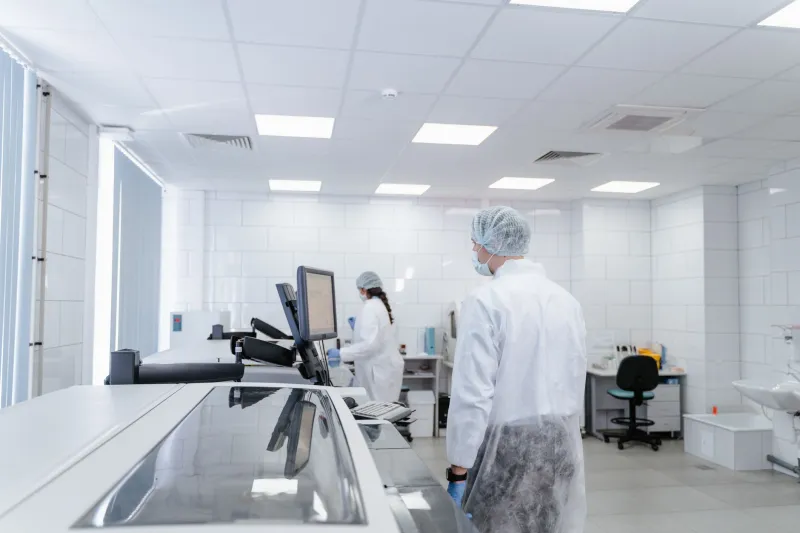
American hospitals are, at their operational core, extraordinarily complex physical environments. A single large acute-care facility may house thousands of individual pieces of regulated medical equipment — MRI scanners, surgical robots, patient monitoring systems, pharmacy refrigeration units, sterilization autoclaves, and HVAC systems designed to maintain precise pressure differentials between operating suites and adjacent corridors. Each of these systems requires scheduled preventive maintenance, periodic compliance certification, and the capacity for rapid emergency response.
The professionals responsible for that work operate under several professional designations. Biomedical equipment technicians, often referred to as BMETs, manage clinical devices directly involved in patient care. Facilities engineers oversee the physical plant — electrical systems, plumbing, fire suppression, and environmental controls. On-site service representatives from equipment manufacturers provide specialized support for high-value diagnostic platforms. Together, these groups constitute what might reasonably be called the operational backbone of American healthcare delivery.
Yet their contributions are largely invisible to the public and, at times, underappreciated within the institutions they serve.
Preventive Maintenance Is Not Optional
The Joint Commission, which accredits more than 22,000 healthcare organizations across the country, mandates rigorous equipment maintenance schedules as a condition of accreditation. These are not bureaucratic formalities. They are the product of decades of incident data demonstrating what happens when maintenance lapses.
Field technicians working in compliant facilities typically manage maintenance calendars that account for thousands of individual service intervals annually. An MRI system, for instance, requires regular inspection of its cryogenic cooling system, radiofrequency shielding integrity, and gradient coil performance — all of which must be documented and traceable. A lapse in any one of these areas can result in image degradation that affects diagnostic accuracy, or, in more serious scenarios, equipment failure during an active scan.
"The work is invisible when it's done correctly," said one BMET with seventeen years of experience across hospital systems in the Southeast. "Nobody calls a press conference because the defibrillators all passed their monthly checks. But when one fails in a code situation, everyone wants to know why."
That asymmetry — between the anonymity of successful maintenance and the visibility of failure — defines much of the professional experience for on-site healthcare technicians.
When Systems Fail, Ground-Level Response Is Everything
Preventive maintenance reduces failure rates, but it does not eliminate them. Equipment malfunctions, power anomalies, software conflicts, and supply chain disruptions all introduce unpredictable variables into hospital operations. In those moments, the speed and competence of on-site field personnel become the determining factor in whether a clinical disruption becomes a patient safety event.
Consider pharmacy refrigeration. Certain vaccines, biologics, and temperature-sensitive medications must be stored within narrow temperature bands, often between 35 and 46 degrees Fahrenheit. A refrigeration unit failure that goes undetected for more than a few hours can result in the loss of inventory valued at tens of thousands of dollars — and, more critically, the unavailability of medications that patients may need immediately. Facilities technicians who are physically present, monitoring environmental systems in real time, can respond to a cooling anomaly before it crosses the threshold of irreversibility.
The same logic applies to operating room environments. Positive and negative pressure rooms must maintain precise airflow relationships to prevent contamination. A malfunctioning air handling unit in a surgical suite is not a facilities inconvenience — it is a potential infection control failure with direct patient consequences. Field technicians who understand both the mechanical systems and the clinical stakes are the ones positioned to make judgment calls under pressure.
The Cost of Underinvestment
Hospital systems that treat field operations as a cost center to be minimized tend to discover the true cost of that approach at the worst possible time. Deferred maintenance accumulates risk. Reduced staffing levels extend response times. The absence of experienced on-site personnel means that when something goes wrong, the facility is dependent on external service contractors who may be hours away and unfamiliar with the specific configuration of local systems.
The financial exposure is significant. Equipment downtime in a catheterization lab, for example, can cost a hospital system tens of thousands of dollars per hour in lost procedure revenue, to say nothing of the patient care implications. A single regulatory citation stemming from a maintenance deficiency can trigger corrective action plans that consume administrative resources for months.
Institutions that invest consistently in their field operations teams — providing competitive compensation, ongoing technical training, and adequate staffing ratios — tend to operate with greater resilience. Their equipment uptime is higher. Their compliance records are cleaner. And when the unexpected occurs, they have the ground-level capacity to absorb it.
Recognition and the Road Ahead
The healthcare industry has made meaningful progress in recent years in recognizing the professional value of biomedical and facilities technicians. Credentialing bodies such as the Association for the Advancement of Medical Instrumentation offer formal certification pathways that validate technical competency and support career advancement. Some hospital systems have restructured their facilities and biomedical departments to give senior technicians a seat at operational planning tables — a recognition that their field-level knowledge is genuinely strategic.
Still, the gap between the criticality of this work and its institutional visibility remains wide. Workforce shortages in the biomedical field are a documented concern, with demand for qualified BMETs outpacing the supply of trained candidates in many regions. Community colleges and technical programs that prepare students for these careers deserve greater institutional and public support than they currently receive.
The technicians themselves, by and large, are not seeking recognition for its own sake. What they are seeking — and what the facilities they serve genuinely require — is the organizational commitment to resource, train, and retain people who understand that a hospital is not simply a building where medicine is practiced. It is a precision environment that must be actively maintained, hour by hour, by people who know exactly what they are doing.
At 3:02 a.m. in that Ohio cardiac unit, the BMET logs the infusion pump replacement, updates the maintenance record, and walks back to the equipment room. There are six more hours in his shift. The hospital, as far as anyone will notice in the morning, ran perfectly through the night.