Earned on the Floor: Why America's Sharpest Supply Chain Minds Started at the Dock
Earned on the Floor: Why America's Sharpest Supply Chain Minds Started at the Dock
There is a particular kind of knowledge that cannot be downloaded, licensed, or imported from a consulting firm. It lives in the hands of a dock supervisor who can tell a shipment is running late before the tracking system registers the delay. It exists in the muscle memory of a route coordinator who has personally driven every corridor on her network and knows which interchange backs up on Tuesday afternoons in November. It is, in the truest sense, ground-level expertise — and the logistics industry is quietly rediscovering just how rare and valuable it really is.
For much of the past decade, the prevailing narrative in supply chain management has centered on transformation from the top down: artificial intelligence, predictive analytics, autonomous vehicles, and end-to-end visibility platforms. These are not trivial developments. But in the race to modernize, the industry has sometimes treated operational experience as a legacy credential — something to be acknowledged, then replaced. The veterans who built their careers on the floor have watched this shift with a measured skepticism born of hard experience.
They were right to be skeptical.
The Curriculum No University Offers
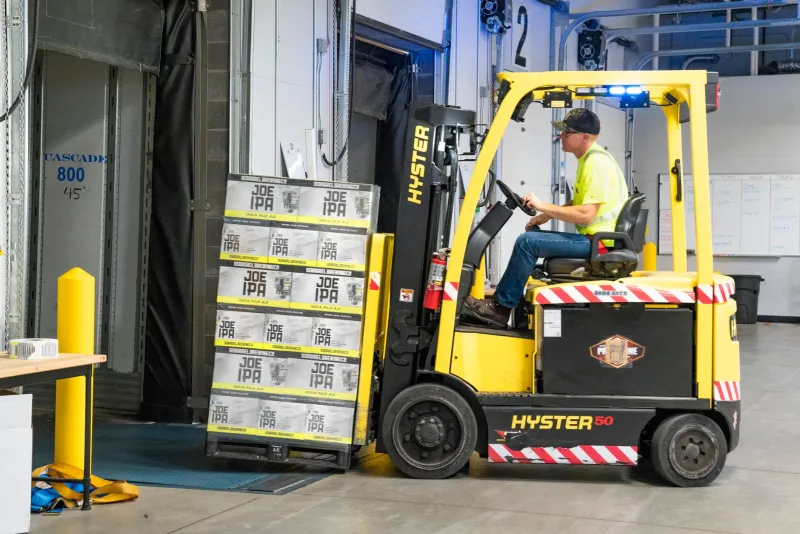
Consider what a loading dock actually teaches. A new hire working a regional distribution center in the Midwest learns, within their first winter, that weather-related delays cascade unpredictably — that a single ice event in Indianapolis can ripple outward for 72 hours across a network that spans four states. They learn that carrier communication is an art form, that a particular driver's radio silence means one thing and another's means something entirely different. They learn to read a floor — to sense when a shift is running behind not from a screen but from the pace of movement, the pitch of conversation, the way pallets are being staged.
This is not anecdote. This is operational intelligence, accumulated incrementally, tested daily under real conditions. And the professionals who have spent years — sometimes decades — absorbing it carry a cognitive advantage that is extraordinarily difficult to quantify and even harder to transfer.
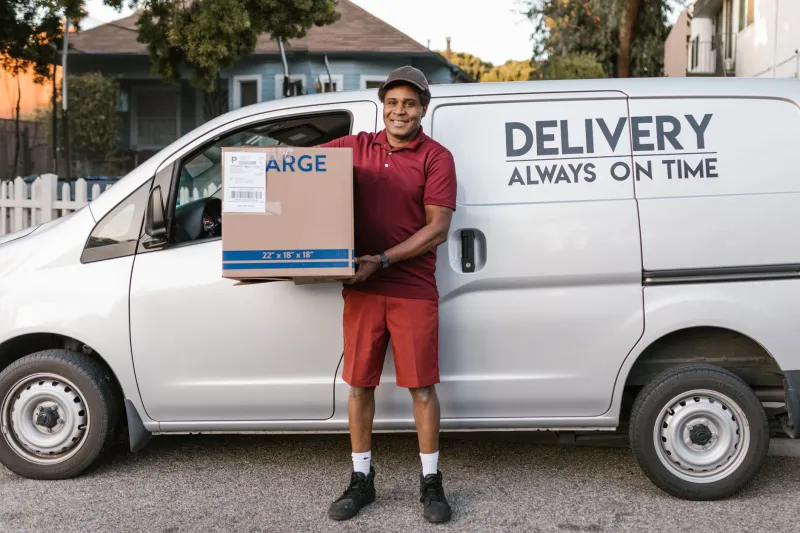
Mike Caruso spent eleven years driving regional freight routes across the Southeast before moving into operations management at a mid-sized third-party logistics firm in Atlanta. He now oversees a network of twelve distribution nodes and a workforce of several hundred. When asked what prepared him most for the role, he does not mention his evening MBA program or the enterprise software certifications he has accumulated. He mentions the years he spent watching how loads shifted on long hauls, how customers behaved when deliveries ran late, and how dispatchers responded under pressure.
"You can look at a dashboard and see that a route is underperforming," he says. "But if you've driven that route, you know why it's underperforming. And you already know three ways to fix it before anyone else has finished reading the report."
The Quiet Operators Running Efficient Networks
Caruso is not an anomaly. Across the country, a cohort of logistics professionals who came up through physical, hands-on roles — dock workers, drivers, yard managers, freight handlers, route coordinators — now occupy positions of significant operational authority. They tend not to seek industry recognition. They are not frequent speakers at supply chain conferences. But the organizations they run consistently punch above their weight class.
What distinguishes these operators is not a resistance to technology. Most are enthusiastic adopters of tools that genuinely improve performance. What sets them apart is their capacity to evaluate those tools critically — to recognize when a platform is solving a real problem and when it is generating noise. They have a baseline of physical reality against which every digital solution is measured.
This is an increasingly rare capability. As logistics organizations have grown more complex and the distance between executive decision-making and floor-level operations has widened, a dangerous gap has opened. Strategies developed without ground-level input frequently collide with conditions that no model anticipated. Routing optimizations that look elegant on a screen ignore the realities of dock availability, driver behavior, and local infrastructure. Warehouse automation projects proceed without adequate input from the workers who understand the actual flow of goods.
The result, in many cases, is expensive. Rework. Delays. Morale problems. And a creeping organizational dysfunction that is difficult to diagnose because its origins lie in a deficit of practical knowledge at the planning level.
Reclaiming the Floor as a Source of Competitive Advantage
Some of the most forward-thinking logistics companies in the United States are beginning to address this directly — not by slowing investment in technology, but by deliberately cultivating and retaining the operational expertise that makes technology useful.
This means building career pathways that allow field-level talent to advance without abandoning the work that made them effective in the first place. It means structuring organizations so that dock supervisors and route coordinators have genuine input into planning decisions. It means treating ground-level experience not as a starting point to be outgrown, but as a permanent and valued source of competitive intelligence.
It also means rethinking how the industry recruits and develops leadership. The assumption that strategic acumen flows primarily from formal education or technology fluency is increasingly difficult to defend. The evidence from high-performing operations suggests that the most effective leaders are often those who can translate between the physical and the digital — who understand the algorithm because they understand the floor it is trying to model.
The Instinct That Algorithms Haven't Caught Up To
There is a concept in operational management sometimes called "tacit knowledge" — the kind of understanding that is so deeply embedded in experience that it cannot be fully articulated, only practiced. The logistics industry runs on tacit knowledge. The judgment call made at 11 p.m. when a load needs to be rerouted. The decision to hold a shipment rather than release it into a deteriorating weather window. The read on a vendor relationship that tells an experienced operator when a promised delivery date is solid and when it is optimistic.
No platform currently on the market replicates this. Not reliably. Not at the granular level where operational outcomes are actually determined.
The professionals who possess it — who earned it over years of physical, demanding, ground-level work — are among the most valuable assets in American logistics. The industry's challenge is recognizing that value before it retires, and building the organizational structures that ensure the next generation gets the same education.
The best logistics minds in America didn't leave the loading dock behind. They carried it with them. And the operations they run today are proof of what that foundation is worth.