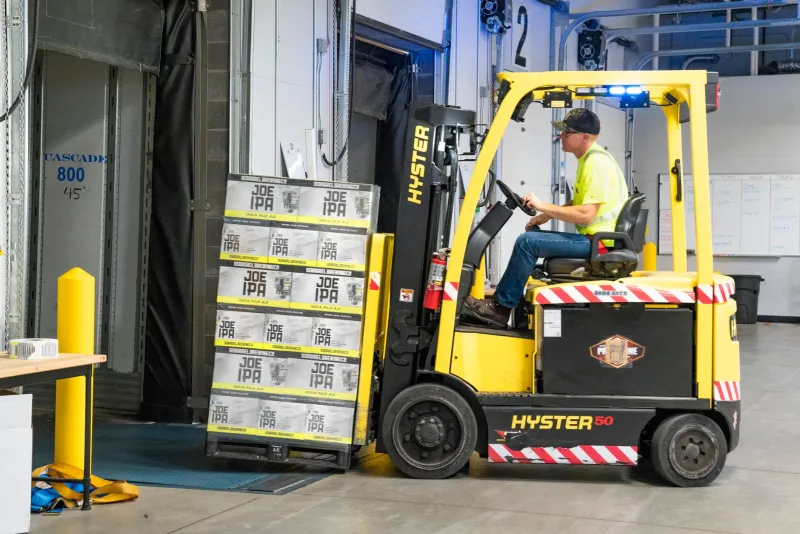
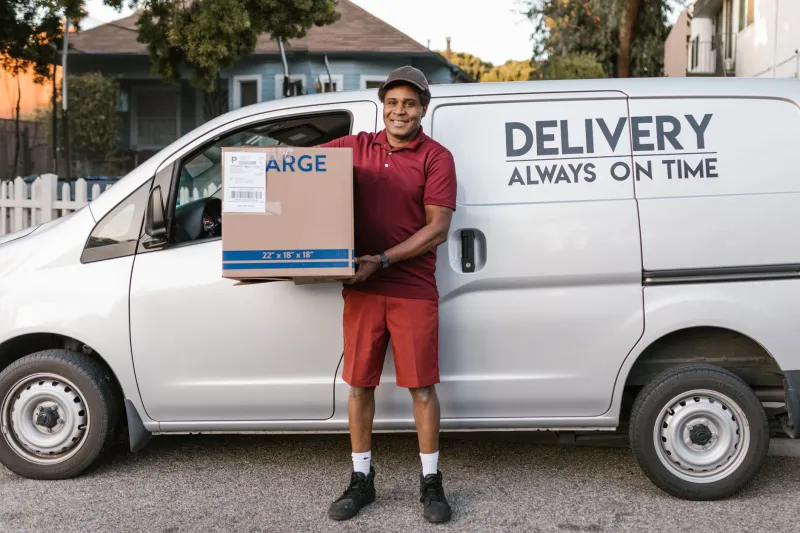
From the Loading Dock to the Corner Office: Why Field Experience Belongs at the Top
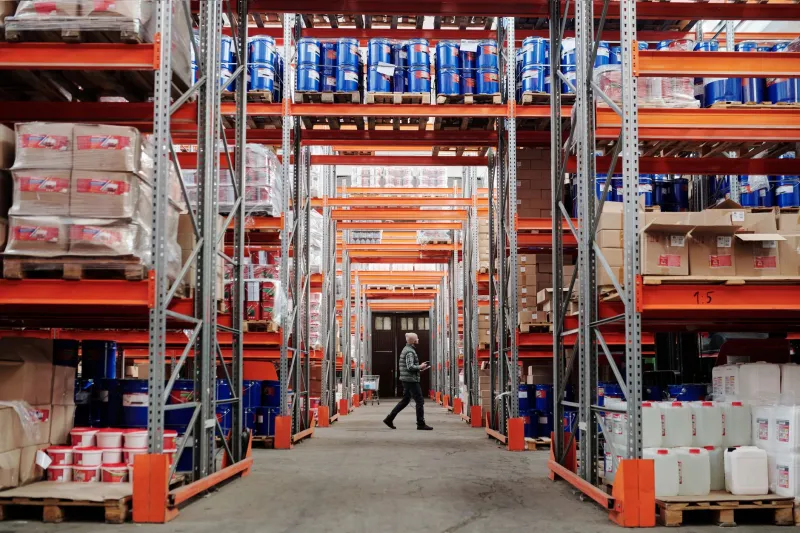
There is a particular kind of knowledge that cannot be acquired in a lecture hall or distilled into a case study. It is the knowledge of what happens when a refrigerated trailer breaks down at 2 a.m. on a rural interstate, when a port strike reshapes three weeks of inbound freight with four hours' notice, or when a warehouse team is short-staffed on the highest-volume shipping day of the year. That knowledge — earned through presence, pressure, and repetition — is the foundation of genuinely effective operations leadership. And yet, across the American logistics and supply chain industry, it remains chronically undervalued at the executive level.
The prevailing model for grooming senior leadership in operations-intensive businesses still leans heavily on formal credentials: the MBA from a recognized program, the consulting pedigree, the financial modeling background. These qualifications are not without merit. But when they substitute for field experience rather than complement it, organizations pay a price that rarely appears on a balance sheet — at least not immediately.
The Credentialing Trap
The bias toward academic and consulting credentials in executive hiring is deeply embedded in American corporate culture. It is reinforced by recruiting firms that filter résumés by degree, by boards that equate prestigious institutions with reduced risk, and by a broader cultural assumption that theoretical mastery translates naturally into operational competence. In asset-light industries, that assumption occasionally holds. In logistics, warehousing, field services, and last-mile delivery, it frequently does not.
The gap becomes visible in the details. An executive who has never managed a shift on a distribution floor may understand throughput as a metric but struggle to grasp why throughput degrades at predictable points in a twelve-hour cycle. A leader who has never coordinated a field crew during an equipment failure may optimize for cost on paper while inadvertently creating conditions that guarantee service failures in practice. The numbers look right until they do not — and by the time they do not, the operational damage is already done.
This is not an argument against education. It is an argument against substituting it for something irreplaceable.
What the Field Actually Teaches
Spend time with executives who rose through operations roles — people who started as dispatchers, route drivers, dock supervisors, or field technicians — and a consistent set of competencies emerges. They tend to understand constraint not as an abstraction but as a physical reality. They know which bottlenecks are structural and which are behavioral. They can read a team's morale from across a floor. They anticipate failure modes before metrics surface them because they have seen those failure modes materialize firsthand.
Consider the trajectory of leaders like Mike Rowe, whose advocacy for skilled trades has highlighted a broader cultural undervaluation of hands-on expertise, or the operational philosophy embedded in companies like Amazon's early fulfillment leadership, where senior operations managers were expected to spend meaningful time on the floor before ascending to strategic roles. The pattern repeats across industries: organizations that treat field time as a genuine developmental investment — rather than an entry-level obligation to be escaped as quickly as possible — tend to build more resilient operational cultures.
 Photo: Mike Rowe, via assets.lightsourcebp.com
In the trucking sector, several of the most durable regional carriers in the United States are led by executives who began their careers behind the wheel or in the yard. Their proximity to the work informs decisions about driver retention, equipment investment, and customer commitments in ways that pure financial analysis cannot replicate. They do not just manage drivers — they understand drivers, because they were drivers.
The Competitive Arithmetic
The business case for field-experienced leadership is not purely philosophical. It is structural. Operations-intensive companies live and die by execution. The margin between a profitable quarter and a damaging one often comes down to whether the people making decisions understand the cost of those decisions at the ground level — not in spreadsheet terms, but in human and logistical terms.
Field veterans in leadership roles tend to make faster, more accurate calls during disruptions. They require less translation between strategic intent and operational reality. They earn credibility with frontline teams more readily, which reduces friction in change management and improves the quality of information flowing upward. In an industry where talent retention at the frontline level is a persistent challenge, having leaders who speak the language of the floor is a meaningful differentiator.
There is also a risk-management dimension that is frequently overlooked. Executives who lack operational grounding are more susceptible to optimistic projections from middle management, less equipped to identify when a plan is operationally unworkable, and more likely to approve initiatives that look sound on paper but collapse under real-world conditions. The costs of those failures — in service quality, customer relationships, and employee morale — are rarely captured in the post-mortem analysis that eventually reaches the board.
Building Leadership from the Ground Up
The solution is not to eliminate credentialed hiring or dismiss the value of formal business education. It is to restructure how operations companies develop and promote leadership talent — and to be deliberate about what experience is treated as foundational.
This means creating structured pathways that require aspiring leaders to spend genuine time in field and operational roles before advancing to senior positions. It means recognizing and rewarding the institutional knowledge held by long-tenured frontline supervisors and middle managers. It means rewriting job descriptions at the VP and C-suite level to treat field experience as a qualification rather than a nice-to-have. And it means having honest conversations in boardrooms about whether the people making the highest-stakes operational decisions have ever actually operated anything.
Some companies are already moving in this direction. The growth of internal leadership academies at major third-party logistics providers, the increasing prevalence of rotational programs that place high-potential employees in field roles before fast-tracking them into management, and the broader cultural shift toward valuing skilled trades and operational expertise — these are encouraging signs. But the pace of change is slow relative to the scale of the need.
The Ground Holds the Answer
At On Ground, the premise is simple: real-world solutions come from ground-level expertise. That belief is not a marketing position — it is an operational philosophy. And it applies as much to the people sitting at the top of an organization as it does to the crews working the early shift.
The next generation of logistics and operations leadership will face challenges that no MBA curriculum has fully anticipated: accelerating automation, increasingly complex supply chains, climate-driven disruption, and a workforce that demands different things from its employers than previous generations did. Navigating those challenges will require leaders who can think strategically and act operationally — who understand the view from thirty thousand feet because they have spent years at ground level.
The loading dock is not a stepping stone to be left behind. For the companies that understand this, it is a proving ground for the people who will eventually define them.