The Final Stretch: How Street-Level Operators Are Fixing America's Most Expensive Delivery Problem
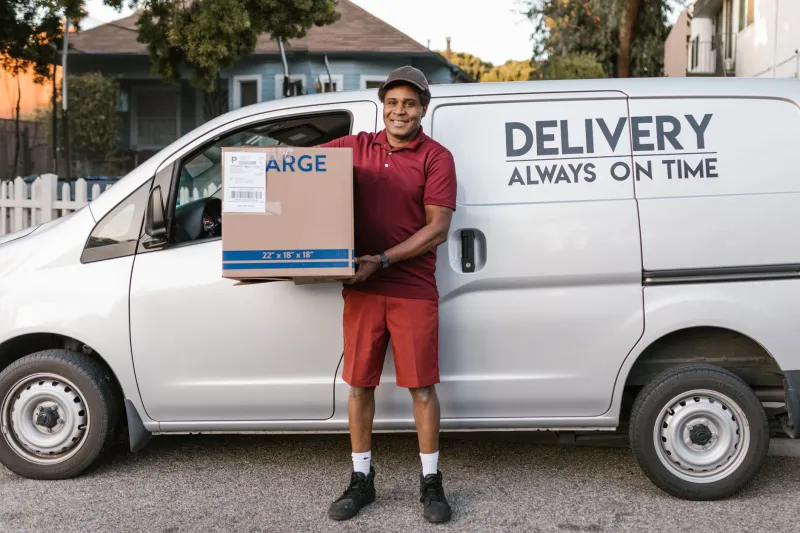
The Final Stretch: How Street-Level Operators Are Fixing America's Most Expensive Delivery Problem
It is one of the great paradoxes of modern commerce: a package can travel five thousand miles across oceans and continents with remarkable precision, only to fail in the final ten blocks of its journey. For logistics professionals who work at street level — not in data centers — this is not a surprising revelation. It is Tuesday.
The last mile of delivery, broadly defined as the movement of goods from a regional distribution hub to the end customer's door, consistently accounts for 41 to 53 percent of total supply chain costs, according to industry research. In a sector where margins are notoriously thin, that figure is not merely uncomfortable — it is existential for smaller carriers and regional operators who cannot absorb losses the way national players can.
And yet, despite the deployment of sophisticated route optimization software, drone pilot programs, and autonomous vehicle trials, the fundamental challenges of last-mile delivery in the United States remain largely unsolved. The question worth asking is: why?
Why Technology Alone Cannot Fix a Human Problem
The honest answer begins with geography and human behavior — two variables that algorithms handle poorly.
American cities were not designed with modern delivery density in mind. Midtown Manhattan presents entirely different operational challenges than suburban Phoenix or rural Appalachia. A routing platform optimized for one environment may actively underperform in another. Field operators in cities like Chicago and Houston frequently describe situations where a driver's local knowledge — knowing which loading dock is actually accessible on a Tuesday morning, or which apartment complex has a notoriously unreliable buzzer system — saves more time than any software update.
 Photo: Midtown Manhattan, via www.grandauto.hr
"The map doesn't know that the freight elevator in that building goes down for maintenance every Wednesday," one regional delivery manager in the Mid-Atlantic corridor noted in a recent industry forum. "My driver does."
Beyond infrastructure quirks, customer behavior introduces another layer of unpredictability. Failed delivery attempts — no one home, incorrect address, access restrictions — remain one of the single largest contributors to last-mile cost overruns. Each failed attempt can add three to five dollars in direct operational cost per package, and that number compounds quickly across thousands of daily deliveries.
The Rise of Hyperlocal Depot Networks
One of the more effective ground-level responses to this challenge has been the quiet proliferation of hyperlocal depot networks — sometimes called micro-fulfillment hubs or urban consolidation centers. Rather than routing all deliveries from a single regional warehouse located at the metro fringe, operators are establishing smaller staging facilities positioned within or immediately adjacent to high-density delivery zones.
In practical terms, this means a carrier might lease a modest warehouse space in a dense urban neighborhood, pre-position inventory or sorted packages there overnight, and dispatch smaller vehicles — cargo vans, electric bikes, or even foot couriers — for the final push during peak morning hours. The result is a dramatic reduction in drive time, lower fuel consumption, and more predictable delivery windows.
Small and mid-sized operators in cities like Denver, Nashville, and Philadelphia have been piloting this model with measurable results. By shortening the radius of each delivery run, they reduce exposure to traffic variability and allow drivers to complete more stops per shift. It is a straightforward concept — but executing it requires real estate relationships, local permitting knowledge, and operational flexibility that large national carriers often struggle to replicate at speed.
Hybrid Routing: Combining Machine Intelligence with Field Judgment
Another approach gaining traction among experienced field operators is what practitioners are beginning to call hybrid routing — a deliberate combination of algorithmic planning and driver discretion.
Pure algorithmic routing assumes that the data fed into the system is accurate and complete. In reality, it rarely is. Road closures, construction delays, seasonal access issues, and building-specific access policies introduce constant friction that no static database fully captures. Field operators who have learned to treat routing software as a starting point rather than a final word tend to outperform those who treat it as gospel.
In practice, hybrid routing means giving experienced drivers a defined stop sequence generated by software, while also granting them explicit authority to deviate from that sequence based on real-time conditions. Paired with end-of-day debrief protocols — where drivers log the adjustments they made and why — this approach creates a feedback loop that gradually improves both the algorithm and the team's collective knowledge base.
Several regional carriers have formalized this process, building internal knowledge libraries that document building-specific access notes, preferred parking locations, and contact information for on-site building staff. This institutional knowledge, built from the ground up by drivers who work the same routes week after week, represents a competitive advantage that is genuinely difficult for a new entrant to replicate quickly.
The Customer Communication Variable
No discussion of last-mile performance is complete without addressing the role of customer communication. Failed deliveries are expensive, but many of them are preventable — and prevention often comes down to proactive, accurate communication rather than operational heroics.
Field operators who have invested in clear, timely delivery notifications — including realistic time windows, driver tracking links, and simple rescheduling options — report meaningful reductions in failed first-attempt rates. The technology required is not particularly sophisticated. What matters more is the discipline to maintain accurate data and the organizational commitment to keep customers informed even when things go sideways.
This is an area where smaller, locally-focused operators sometimes outperform national carriers. A regional delivery company that serves a specific metro area can build genuine familiarity with its customer base, develop relationships with property managers and business owners, and respond to service failures with a level of personal accountability that a national call center cannot easily replicate.
What the Ground Teaches That the Dashboard Cannot
The broader lesson embedded in the last-mile problem is one that extends well beyond logistics. Real-world operational environments are messier, more variable, and more human than any model fully accounts for. The companies that perform best in these environments are not necessarily those with the most advanced technology — they are the ones that combine reasonable technology with deep field expertise and the organizational humility to learn from what actually happens on the ground.
For American businesses navigating supply chain pressures in 2024 and beyond, the last mile is not merely a delivery problem. It is a test of operational maturity. Passing that test requires investment not just in platforms and software, but in the people, processes, and ground-level knowledge that no dashboard can fully replace.
The final stretch, it turns out, is still won on foot.