Beyond the Algorithm: How Rural Route Planners Are Winning the Last Mile With Local Knowledge
The routing software flagged the address as undeliverable. The field planner knew better. She had driven that stretch of county road outside Morgantown, West Virginia, enough times to know that the GPS coordinates placed the destination a quarter mile east of where the actual driveway began — at the base of a ridge that swallowed cell signals whole. She adjusted the route by hand, added a note in the system, and the delivery arrived on time.
That kind of intervention happens dozens of times a day across rural America, in places where the last mile looks nothing like the tidy suburban grid that most logistics platforms were designed to serve. And it is happening largely without fanfare, executed by a workforce whose expertise rarely appears in a press release or a technology pitch deck.
Where the Algorithms Stop Working
Urban logistics has attracted enormous investment in optimization technology over the past decade. Dynamic routing engines, predictive demand modeling, and real-time traffic integration have transformed delivery operations in cities like Chicago, Dallas, and Los Angeles. The results are measurable, the data is abundant, and the business case is straightforward.
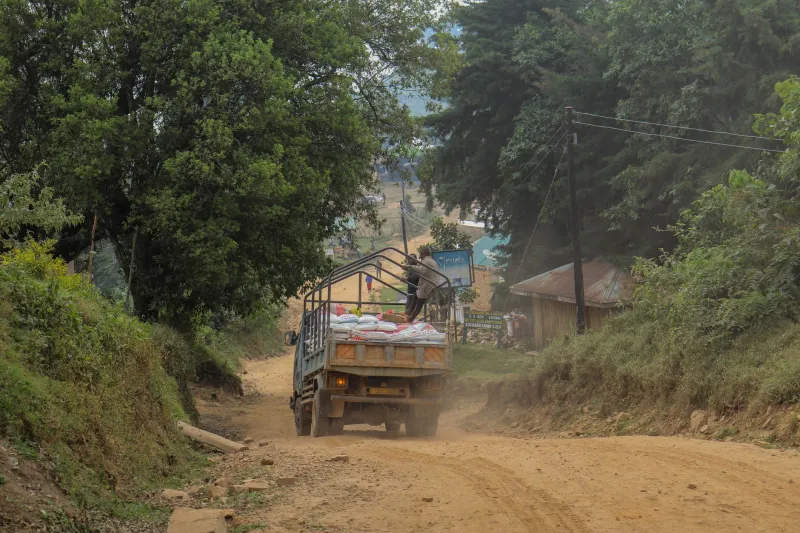
Rural America presents a fundamentally different operating environment. Low delivery density means that the mathematical efficiencies that drive urban route optimization — clustering stops, minimizing backtracking, calibrating time windows — offer diminishing returns when stops are separated by ten or twenty miles rather than ten or twenty blocks. Road quality is inconsistent and frequently unmapped at a granular level. Seasonal conditions can render a route passable in August and impassable in February. And address data, the foundational input for any routing system, is notoriously unreliable in communities that predate standardized addressing conventions.
According to the USDA, approximately 46 million Americans live in rural counties. Many of them depend on delivery and field service operations for everything from prescription medications and medical equipment to agricultural supplies and essential retail goods. Serving them is not optional. It is an operational obligation — and it demands a different kind of expertise.
The Human Layer That Technology Cannot Replace
Field-based route planners working in low-density service areas carry a body of knowledge that resists digitization. They know which bridge on Route 7 has a weight limit that the county hasn't updated in its database. They know that the shortcut through the Hendersons' property is only available during dry months, and only because the landowner gave verbal permission three years ago. They know that a particular cluster of addresses in a hollow outside Pikeville requires an early morning window before the logging trucks take over the road.
This is not anecdotal color. It is operational intelligence that directly determines whether a service commitment is met or missed. And it accumulates slowly, through repetition, observation, and relationship-building with the communities being served.
Route planners in these environments frequently operate as the connective tissue between a company's planning systems and its field crews. They translate algorithmic outputs into executable instructions, flag the gaps where software recommendations would create real-world failures, and maintain informal knowledge repositories that often exist nowhere else in the organization. In many cases, they are also the primary point of contact when a driver encounters an unexpected obstacle — a washed-out road, a locked gate, an address that simply does not correspond to any physical location a newcomer could find without guidance.
Improvisation as Infrastructure
One of the defining characteristics of effective rural route planning is the capacity for structured improvisation. Unlike urban operations, where the density of alternatives allows for relatively predictable contingency planning, rural routes often have no fallback option. If the primary path is blocked, the next available route may add an hour to the drive. If a delivery window is missed, rescheduling may mean a multi-day delay for a recipient who has no nearby retail alternative.
Experienced planners in these environments have developed informal protocols that blend local knowledge with adaptive decision-making. Some maintain hand-drawn supplemental maps that capture details no commercial platform reflects. Others keep running logs of seasonal road conditions, updated through direct communication with drivers after each run. A few have built informal networks with local emergency services and municipal road crews to receive early notification of closures or hazardous conditions before they affect the day's schedule.
These practices are neither glamorous nor scalable in the conventional sense. But they work. And in communities where the margin for error is narrow and the consequences of a missed delivery are tangible, working is the only metric that matters.
Technology as a Tool, Not a Substitute
None of this is an argument against technology. The most effective rural logistics operations are not choosing between software and human judgment — they are integrating both, deliberately and with a clear understanding of where each contributes most.
Emerging tools are beginning to close some of the gaps. Enhanced satellite imagery is improving road-level mapping in previously underserved areas. Some carriers are investing in proprietary data layers that incorporate driver-reported conditions over time, gradually building the kind of granular local knowledge that field planners have traditionally carried in their heads. Drone delivery pilots in states like North Carolina and Virginia are exploring whether aerial delivery can circumvent the ground-level obstacles that make certain rural routes prohibitively costly.
But the integration of these tools still depends on field-level operators who understand the terrain well enough to identify where the technology is reliable and where it requires human override. A routing engine that has been fed accurate, field-verified data performs dramatically better than one operating on default commercial mapping. The quality of that input is a direct function of the people managing operations on the ground.
An Underrecognized Workforce Doing Essential Work
The route planners and field coordinators working in rural logistics occupy a professional space that receives relatively little recognition in the broader conversation about supply chain innovation. They are not the engineers building the platforms, nor the executives announcing the investments. They are the practitioners who make the system function in conditions the system was not designed for.
Their work sustains communities that the broader economy often treats as afterthoughts — places where a reliable delivery operation is not a convenience but a lifeline. Getting prescription medications to an elderly resident in rural Appalachia on schedule is not a minor operational footnote. For that resident, it is the difference between managed health and a crisis.
The revolution happening in rural last-mile logistics is not the kind that generates keynote presentations or venture capital coverage. It is quieter, more incremental, and more dependent on earned expertise than on breakthrough technology. It is, in other words, exactly the kind of work that defines what it means to operate on the ground — where the map ends and judgment begins.