Never Dark: How Field Crews Execute Major Infrastructure Upgrades Without Stopping the Clock
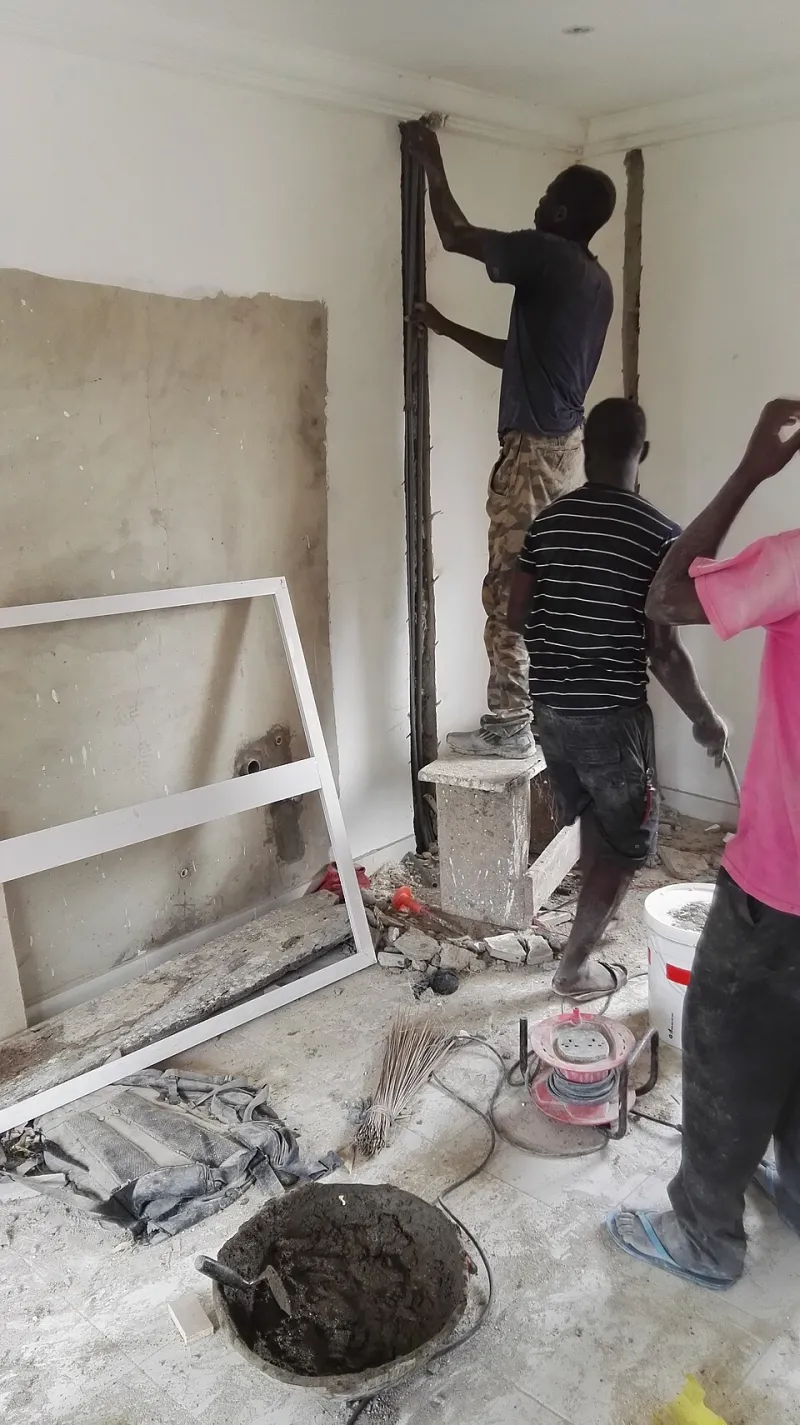
Photo: E. Stanley Ukeni, CC BY-SA 4.0, via Wikimedia Commons
The easiest way to retrofit aging infrastructure is to shut the facility down, clear the space, and work without constraint. No occupants to route around. No live circuits to isolate. No active processes to protect from dust, vibration, or interruption. The work proceeds cleanly, on a predictable schedule, with minimal risk of collateral damage.
Almost no one gets to do it that way.
Hospitals cannot close their emergency departments while electrical panels are replaced. Manufacturing plants cannot halt production for the weeks required to upgrade a compressed air system. Data centers cannot go dark while fiber infrastructure is rerouted. The facilities that most urgently need infrastructure modernization are, almost universally, the ones that can least afford to pause.
This reality has given rise to a specialized class of field crew—experienced retrofit teams who have built their entire operational approach around the constraint of continuity. Their work is technically demanding, logistically complex, and largely invisible to the facilities that depend on it.
The Sequencing Problem
At the core of every live-facility retrofit is a sequencing challenge that has no clean solution. To replace an aging electrical distribution panel, you must de-energize it. To de-energize it, you must first transfer its loads to a temporary source. To install the temporary source, you need physical space and access that may require relocating other equipment. Each step creates a dependency on the previous one, and the entire chain must be executed without interrupting the downstream systems that the panel serves.
Experienced retrofit teams approach this problem through what project managers in the field sometimes call "backward planning"—starting from the desired end state and working backward to identify every dependency, constraint, and prerequisite. The goal is to map the full sequence before a single tool is deployed, so that the crew on the floor is executing a tested plan rather than improvising in real time.
In practice, the plan always encounters reality. A wall cavity that was assumed to be accessible turns out to be packed with legacy conduit. A temporary power connection that was supposed to be straightforward requires coordination with the utility company. A delivery that was scheduled for Monday arrives on Wednesday, compressing the window for a critical installation phase.
The crews who perform this work successfully are the ones who have internalized the difference between a plan and a script. The plan provides the structure. The script would require conditions that never exist.
Managing the Live Environment
The physical environment of a live-facility retrofit presents hazards and complications that planned-shutdown projects do not. Electrical work near energized conductors demands strict adherence to arc flash protocols and lockout/tagout procedures, even as the pace of the project creates pressure to move quickly. Mechanical work in occupied spaces requires dust containment, noise management, and access coordination that adds hours to tasks that would take minutes in an empty building.
In healthcare environments, these constraints become more acute. Infection control requirements in hospitals dictate that construction zones be physically isolated from patient care areas through sealed barriers, negative pressure systems, and controlled entry points. Work that generates vibration must be scheduled to avoid interference with sensitive diagnostic equipment. Crews working near operating rooms or intensive care units operate under protocols that can change with little notice based on clinical needs.
"You learn very quickly that the building's schedule is not your schedule," said a project superintendent who has managed electrical retrofit projects in hospital systems across the Southeast. "You plan for a six-hour window, and at hour three, they need you to stop because something is happening in the adjacent wing. You adapt, and you come back."
Data centers present a different set of constraints. The density of active systems in a modern data center—the heat loads, the precision cooling requirements, the sensitivity of the equipment to particulate contamination—means that retrofit crews must manage their physical footprint with unusual care. A cable pulled carelessly through a raised floor can disrupt airflow patterns that a cooling system depends on. A temporary partition installed incorrectly can create a hot spot that triggers thermal alarms.
Supply Chain as a Field Discipline
One of the less-visible skills of experienced retrofit teams is supply chain management. On a live-facility project, materials cannot simply be staged on site and accessed as needed. Storage space is limited, delivery access is often constrained, and the sequencing of the work requires that specific materials be available at specific times—not earlier, because there is nowhere to put them, and not later, because the project cannot wait.
This requires a level of coordination with suppliers that goes beyond standard procurement. Retrofit project managers maintain close communication with distributors and manufacturers to track lead times in real time, identify potential delays early, and arrange phased deliveries that align with the installation sequence. When a critical component is delayed, they need to know weeks in advance, not days, so that the sequence can be adjusted without triggering a cascade of downstream disruptions.
The supply chain dimension of retrofit work has grown more complex in recent years as lead times for electrical components, switchgear, and HVAC equipment have extended. Teams that once could rely on regional distributors for quick replenishment now build longer procurement lead times into their schedules and maintain closer relationships with manufacturers to monitor availability.
Cross-Shift Coordination
Many live-facility retrofits are executed across multiple shifts, with different crews working overnight or on weekends to take advantage of reduced occupancy or lower operational demand. This creates a coordination challenge that is partly logistical and partly communicative.
A crew working the overnight shift must understand not just what they are doing, but what the day shift left, what was changed, and what the next phase of the sequence requires. Any deviation from the plan—a decision made in the field, a discovered condition that required an adjustment, a temporary measure put in place to bridge a gap—must be communicated clearly so that the incoming crew is not working from an outdated picture of the site.
The most effective retrofit teams build handoff protocols into their standard operating procedures. End-of-shift documentation, photo records of in-progress work, and direct briefings between outgoing and incoming supervisors are treated as non-negotiable rather than optional. The cost of a miscommunication in a live facility is too high to leave handoffs to informal conversation.
The Discipline of Continuity
What distinguishes the best live-facility retrofit teams is not simply technical competence—it is an operational philosophy that places continuity of the facility's function above the convenience of the crew. Every decision is filtered through the question of what the impact on the live environment will be, and whether that impact is acceptable.
This discipline is developed through experience and reinforced through accountability. Crews that have worked through the consequences of a poorly managed transition—a temporary power source that failed, a system that was taken offline before its backup was verified, a delivery that arrived at the wrong time and blocked an emergency access route—carry that knowledge into every subsequent project.
The facilities they serve rarely see the full complexity of what those crews manage on their behalf. The lights stay on. The servers keep running. The patients receive care. And somewhere in the walls, behind temporary barriers and lockout tags and carefully sequenced work orders, a team is methodically replacing the infrastructure that makes all of it possible.