Fault Lines: The Foundation Inspectors Who Stop Structural Disasters Before They Start
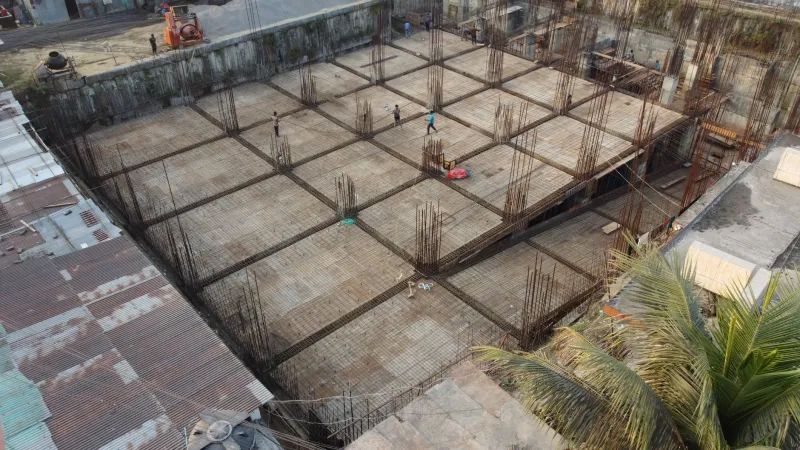
The foundation of a building is, by design, meant to be invisible. Concrete is poured, soil is compacted, rebar is set, and then the whole apparatus disappears beneath the structure it will support for decades. That invisibility is precisely what makes foundation inspection so demanding — and so indispensable.
Foundation inspectors are the professionals who look hardest at what everyone else is prepared to forget. Their work is conducted at the earliest and most unglamorous stages of construction, often in conditions that are wet, cold, and poorly lit. But the decisions they make — and the defects they catch — can determine whether a development project survives or becomes a financial ruin.
What the Drawings Don't Show
Architectural plans are theoretical documents. They describe what a structure is supposed to look like under ideal conditions, with soil behaving as the geotechnical report predicted and materials arriving to specification. Field conditions, however, are rarely ideal.
Foundation inspectors work at the intersection of design intent and physical reality. They are trained to identify the gap between the two. Soil that was tested in dry summer conditions may behave entirely differently after a wet spring. Concrete poured during a temperature drop may cure improperly, leaving voids or weak zones invisible to the naked eye. Rebar placed by a crew working under schedule pressure may not meet the spacing or depth requirements specified in the structural drawings.
None of these discrepancies show up in project management software. They show up in the field — and only to someone who knows what to look for.
The Economics of Early Detection
The financial case for rigorous foundation inspection is not subtle. A structural defect identified during the pour phase costs a fraction of what the same defect costs once the building is framed, occupied, or — in the worst cases — partially collapsed.
In 2019, a mid-rise residential development in the mid-Atlantic region faced a significant setback when post-construction inspections revealed that portions of the mat foundation had been poured without adequate consolidation. The resulting voids compromised load-bearing capacity across several bays. Remediation required underpinning, partial demolition of completed floors, and a legal dispute with the general contractor that ran for nearly three years. Total exposure exceeded four million dollars.
Contrast that with a commercial development in the Southeast where an independent foundation inspector flagged inconsistent slump readings during a concrete pour on a cold morning in January. The inspector halted the pour, called for retesting, and identified a batch of concrete that had been improperly mixed at the plant. The correction required less than a day's delay and cost the project roughly eight thousand dollars. The alternative — a compromised foundation slab beneath a forty-thousand-square-foot retail structure — was never quantified because it never happened.
That is the nature of prevention. Its value is measured in what didn't occur.
Ground Truth in Practice
Foundation inspectors draw on a combination of formal training and hard-won field experience. Many hold certifications from organizations such as the American Concrete Institute or the International Code Council, and their work is often required by local building authorities on commercial and public projects. But the credential only establishes a baseline. The real expertise is accumulated through years of watching concrete behave, reading soil, and developing the professional instinct to pause when something doesn't look right.
That instinct is difficult to teach and impossible to replicate with a sensor array or a building information model. Inspectors describe learning to read the surface of a freshly poured slab the way an experienced chef reads a pan — subtle visual cues that signal what is happening beneath the surface. They learn to ask the right questions of foremen and plant operators, and to recognize when the answers don't match the paperwork.
They also learn to hold the line under pressure. Construction schedules are unforgiving, and inspectors who call holds or require retesting are rarely thanked in the moment. The gratitude, when it comes, arrives later — often much later, when a building is still standing and its owner is unaware of how close the outcome came to being different.
The Regulatory Landscape
Foundation inspection requirements vary significantly across the United States, which creates uneven protection for developers, lenders, and ultimately the public. In jurisdictions with robust special inspection programs — typically larger metropolitan areas with active building departments — third-party foundation inspectors are mandatory on projects above a certain scope. In rural areas or municipalities with limited enforcement capacity, the same level of oversight may be entirely absent.
This inconsistency places additional responsibility on developers and general contractors who operate across multiple markets. Firms that maintain consistent internal inspection standards regardless of local requirements tend to carry fewer structural surprises. Those that calibrate their diligence to the minimum required by the local authority having jurisdiction often discover that the minimum was insufficient.
Lenders and insurers are increasingly aware of this dynamic. Some institutional lenders now require documented third-party foundation inspection reports as a condition of construction financing, independent of local code requirements. It is a quiet but significant shift — the financial sector applying its own ground-level standard where regulatory frameworks have not kept pace.
The Professionals Behind the Practice
Foundation inspection is not a glamorous career path. It involves early morning starts, physical discomfort, and the perpetual challenge of delivering unwelcome news to people who are already under pressure. Inspectors are often the bearers of information that nobody on the job site wants to hear.
And yet the professionals who have built careers in this discipline tend to describe it with a particular kind of satisfaction. There is something clarifying about work that has an unambiguous standard of success. The foundation either meets specification or it does not. The concrete either consolidated properly or it did not. The answers are not always easy to obtain, but they are always definite.
In an industry where ambiguity is common and accountability is frequently diffuse, that clarity carries its own professional reward. Foundation inspectors know, with a degree of certainty that few construction professionals can claim, exactly what their work is worth. They know it every time a building stands.