What Lies Beneath: The Utility Locating Professionals Keeping America's Job Sites from Becoming Disaster Zones

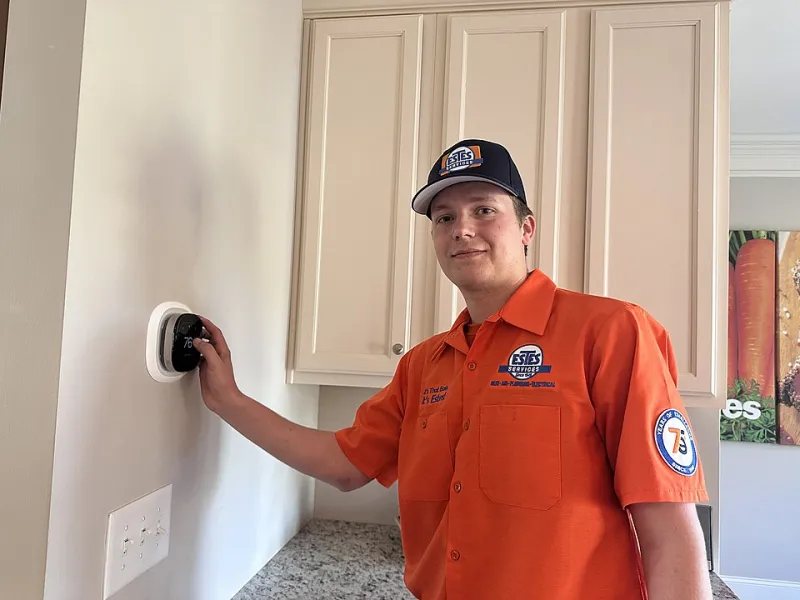
Photo: utility locating technician ground penetrating radar construction site, via lasueur.com
The average American city block contains more infrastructure below street level than most people will ever see above it. Gas distribution mains. High-pressure water lines. Electrical conduit. Telecommunications fiber. Sanitary and storm sewer laterals. Fuel lines serving commercial properties. In older urban areas, some of that infrastructure dates back more than a century — installed before modern record-keeping, rerouted during subsequent construction, and documented in drawings that range from incomplete to entirely nonexistent.
Before any excavation begins on a project of consequence, someone has to account for all of it. That responsibility belongs to utility locating technicians: a specialized workforce that operates largely out of public view but performs one of the most consequential pre-construction functions in the industry.
The Stakes of Getting It Wrong
The consequences of a utility strike are not abstract. A backhoe bucket that contacts a high-pressure natural gas main can produce an explosion capable of injuring workers and damaging structures within a significant radius. A severed fiber optic line serving a data center can interrupt service for thousands of businesses and generate liability claims that outlast the construction project by years. A damaged water main can flood an excavation, undermine adjacent structures, and disrupt service to entire neighborhoods.
According to the Common Ground Alliance, which tracks excavation damage incidents across the United States, a utility strike occurs roughly every sixty seconds in this country. The overwhelming majority of those incidents are preventable. Most trace back to inadequate locating, insufficient verification, or the assumption that a single 811 call-before-you-dig request provides complete coverage — which, in complex urban environments, it rarely does.
This is the gap that professional utility locating technicians are trained to close.
Tools of the Trade
The standard toolkit for a utility locating technician includes electromagnetic induction equipment, which detects the signal emitted by metallic utilities either passively or when a transmitter is applied to the line. For buried plastic pipe — increasingly common in modern gas and water distribution systems — tracer wire or other conductive elements may be present to allow electromagnetic detection. When they are not, technicians turn to ground-penetrating radar, which transmits electromagnetic pulses into the soil and interprets the reflected signals to identify subsurface anomalies.
GPR is not a simple technology to apply. The quality of results varies significantly based on soil moisture content, clay concentration, the presence of rebar or other metallic interference, and the depth of the target utilities. Reading a GPR screen accurately requires pattern recognition developed through extensive field experience. Two technicians looking at the same data can reach different conclusions, and the less experienced of the two may not recognize the ambiguity in what they are seeing.
"The technology gives you information," explained one utility locating professional with over two decades of field work across urban and industrial sites in the Northeast. "Knowing what that information means — and knowing when it's telling you something is missing — that's the part you can't download."
The Limits of the 811 System
The 811 system, administered nationally and executed through state-level notification centers, requires utility owners to respond to excavation notices by marking the approximate location of their facilities. It is an important safety baseline. It is not a comprehensive solution.
Several categories of utilities fall outside the 811 process entirely. Private utilities — lines owned by property owners rather than public utilities — are not enrolled in the notification system and carry no obligation to respond. Abandoned infrastructure, which may still carry pressure or charge depending on how it was decommissioned, is frequently unrecorded. Utilities installed before local record-keeping systems were established may exist only in the memory of workers who have long since retired.
In practice, this means that professional utility locating firms are frequently engaged to perform what is called a "private locate" — a systematic field investigation that goes beyond the standard 811 response to identify everything that might be present, including facilities that no notification system would have flagged. On complex sites, this work can take days and may require multiple methodologies applied in combination.
Field Intuition as a Professional Asset
Beyond the technical instruments, experienced utility locating technicians develop a form of environmental literacy that is difficult to formalize but essential to accurate results. They read the surface for clues: valve boxes and cleanout covers that suggest subsurface infrastructure, pavement patches that indicate previous excavation and repair, vegetation patterns that sometimes reflect the presence of leaking or temperature-affecting utilities below grade.
They cross-reference field observations against available records — as-built drawings, municipal GIS databases, utility company maps — while maintaining appropriate skepticism about the accuracy of those records. They communicate proactively with project engineers and contractors when their findings diverge from documented expectations, because that divergence is often the most important finding of all.
This combination of instrument-based detection and observational judgment places utility locating technicians in a category that does not fit neatly into standard field labor classifications. They are not simply equipment operators. They are diagnosticians working in an environment where the patient cannot speak and the records are incomplete.
A Question of Professional Recognition
Despite the critical nature of their work, utility locating technicians have historically occupied a lower rung on the construction industry's professional hierarchy than their responsibilities warrant. Certification programs exist — the National Utility Locating Contractors Association and other bodies offer credentials that recognize demonstrated competency — but licensing requirements vary widely by state, and the profession lacks the uniform regulatory framework that governs comparable technical disciplines.
This creates a quality gap that project owners and general contractors often do not recognize until something goes wrong. The cheapest locating service on a bid sheet may be staffed by technicians with minimal experience and inadequate equipment, operating under time pressure that does not allow for thorough investigation. The difference between that service and a qualified professional locator is not visible until the excavation begins.
For the project managers and operations directors who bear ultimate responsibility for site safety and schedule performance, the utility locating decision is one of the most consequential low-visibility choices in the pre-construction process. It deserves more scrutiny than it typically receives.
The ground holds everything. The people who know how to read it are worth knowing.