Boots in the Server Room: The Human Crews Holding America's Digital Economy Together
Boots in the Server Room: The Human Crews Holding America's Digital Economy Together
Somewhere in Northern Virginia, in a nondescript building surrounded by security fencing and backup generators the size of freight cars, a technician named Marcus is replacing a failed drive array at 3:14 in the morning. He has been on shift since 11 p.m. He will not clock out until 7 a.m. The server rack he is working on processes a portion of the financial transactions flowing through the eastern United States. There is no margin for error, and there is no one else coming.
This is the ground level of the American digital economy — not the sleek dashboards, not the executive briefings about cloud capacity, and certainly not the consumer-facing interfaces that have made technology feel effortless. The real infrastructure is physical, it is demanding, and it is staffed by people whose work is almost never discussed outside of the facilities they maintain.
What a Data Center Actually Is
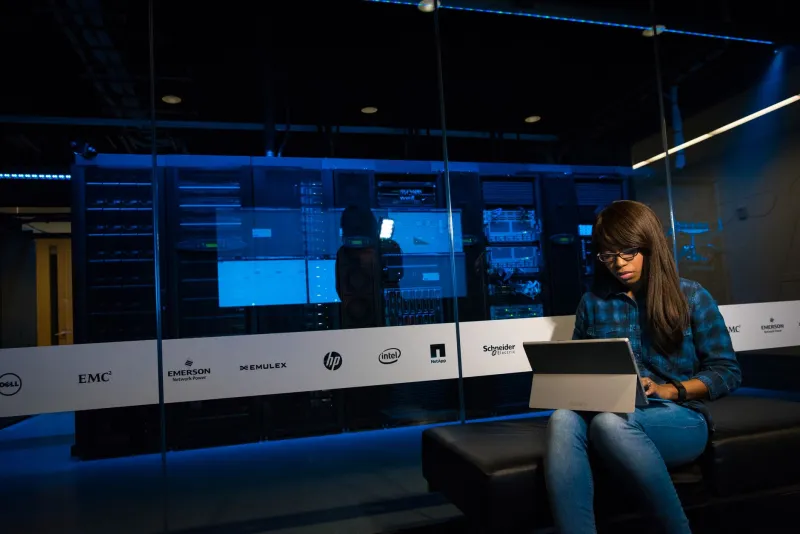
The term "the cloud" has done considerable damage to public understanding of how digital infrastructure actually functions. There is no cloud. There are buildings — hundreds of them, concentrated in places like Ashburn, Virginia; Phoenix, Arizona; Chicago, Illinois; and Dallas, Texas — filled with row upon row of servers, networking equipment, cooling systems, and power distribution hardware. These facilities consume enormous amounts of electricity, generate substantial heat, and require continuous human oversight to remain operational.
A hyperscale data center can occupy hundreds of thousands of square feet. It might house tens of thousands of individual servers. The power draw alone can rival that of a small city. And behind all of it, running rotating shifts that cover every hour of every day of the year, are the field crews responsible for keeping it all running.
These are not software engineers. They are data center technicians, critical facilities engineers, mechanical and electrical specialists, and operations staff who understand both the digital systems they support and the physical plant that keeps those systems alive.
The Skill Set the Industry Doesn't Advertise
The competencies required to work effectively in a data center environment are rarely captured in job postings, and they are almost never reflected in the public conversation about technology careers. The popular narrative tends to focus on coding, software development, and artificial intelligence. The people who ensure that the hardware running those systems doesn't overheat, lose power, or fail catastrophically occupy a different — and largely invisible — professional category.
A qualified data center technician must understand power systems, including uninterruptible power supplies, automatic transfer switches, and generator protocols. They must be familiar with precision cooling infrastructure, which in a large facility can involve chilled water systems, computer room air handlers, and economizer modes that shift based on outside temperature. They must be able to read electrical single-line diagrams, execute lockout/tagout procedures without deviation, and respond to cascading failures under pressure.
They must also be able to do all of this while following strict change management protocols, documenting every action they take, and coordinating with remote operations centers that may be monitoring the facility from another time zone entirely. The combination of technical breadth, procedural discipline, and composure under pressure is not common. It is developed through years of hands-on experience, and it cannot be replicated by a monitoring dashboard, however sophisticated.
The Protocols That Keep the Lights On
Data center operations are governed by layers of procedure that would be familiar to anyone with a background in aviation, nuclear operations, or surgical settings. Two-person integrity rules require that certain tasks — particularly those involving energized electrical equipment — never be performed by a single technician working alone. Maintenance windows are scheduled weeks in advance, coordinated across teams, and executed against detailed runbooks that anticipate failure scenarios before they occur.
When something goes wrong outside of a scheduled window, the response is equally structured. Incident management procedures dictate who is notified, in what order, and what actions are authorized at each stage of escalation. A technician discovering an anomalous temperature reading in a particular zone does not simply act on instinct. They follow a process — verifying the reading, checking related systems, escalating according to protocol, and documenting every step in real time.
This is field operations discipline applied to one of the most consequential environments in modern commerce. The consequences of deviation are not abstract. A single cooling failure in the wrong part of a facility can trigger a cascade that takes servers offline and disrupts services used by millions of people. The pressure is constant, and the protocols exist precisely because human judgment, under stress and fatigue, needs structure to remain reliable.
Rotating Shifts and the Cost of Continuous Coverage
Data centers do not close. They do not observe holidays. They do not experience slow seasons. The demand for continuous uptime means that the human workforce supporting these facilities must also be continuous, which translates into rotating shift schedules that cycle technicians through days, evenings, and overnight coverage in patterns designed to maintain staffing levels without burning individuals out entirely.
The physiological toll of shift work is well documented. Disrupted sleep cycles, elevated stress, and reduced cognitive performance are all associated with long-term rotating schedules. For data center technicians, these effects must be managed carefully, because the work itself demands sustained precision. A fatigued technician executing a power maintenance procedure on live equipment is a liability. The industry has developed mitigation strategies — shift length limits, mandatory rest periods, cross-training protocols that reduce single points of human failure — but the fundamental challenge of keeping skilled people alert and effective across all hours of the day remains an ongoing operational reality.
The Staffing Problem No One Is Talking About
America's data center capacity is expanding at a rate that the existing technical workforce is not equipped to match. Driven by the explosion in artificial intelligence workloads, video streaming, cloud storage, and enterprise computing, the construction pipeline for new data center facilities is running at record levels. Markets like Northern Virginia, Phoenix, and the suburbs of Atlanta are absorbing billions of dollars in new development annually.
Building the facilities is the part the industry has largely figured out. Staffing them is a different matter.
The pool of technicians with the specific combination of skills required for critical facilities work — electrical competency, mechanical systems knowledge, data center-specific protocols, and the temperament for high-stakes shift work — is not growing at a pace commensurate with the construction boom. Compensation has risen in response to demand, but compensation alone does not produce qualified technicians. That requires training programs, apprenticeship pipelines, and time.
Community colleges and trade programs have begun to develop data center-specific curricula, and some of the larger operators have launched internal training initiatives. But the gap between current workforce capacity and projected facility demand is real, and it represents a structural vulnerability that is not adequately reflected in the public discourse about digital infrastructure.
Why Remote Monitoring Is Not a Substitute
The data center industry has invested heavily in remote monitoring and automation. Sensors track temperature, humidity, power draw, and equipment status across thousands of points in a facility. Alerts are routed to operations centers staffed by personnel who may be located thousands of miles away. Artificial intelligence systems flag anomalies and generate recommended responses.
None of this replaces the technician standing in the room.
Sensors fail. Alerts are sometimes ambiguous. Automated systems can misdiagnose complex, multi-system problems that an experienced technician would recognize immediately upon entering a space and observing conditions directly. Physical tasks — replacing hardware, tracing cable paths, inspecting cooling equipment, responding to an active fire suppression event — require a human being with the right skills in the right location at the right time.
The remote monitoring layer is valuable. It extends the reach of the on-site team and provides data that informs decision-making. But it is a tool that supports field operations, not a replacement for them. The facilities that operate most reliably are the ones that understand this distinction and invest accordingly in the human layer.
The Ground Beneath the Cloud
Marcus finishes the drive array replacement at 4:02 a.m. He documents the work, verifies the system status, and notifies the remote operations center that the task is complete. By the time the eastern seaboard wakes up and begins its morning routine — checking email, streaming news, processing transactions — the equipment he repaired will be fully integrated back into the infrastructure that makes all of it possible.
He will not receive a notification that his work was appreciated. There is no mechanism for that. The measure of success in this environment is the absence of disruption, which means that the best outcomes are the ones nobody notices.
That invisibility is, in some respects, the point. The goal of field operations at this level is seamless continuity — to ensure that the physical infrastructure performs so reliably that the people depending on it never have reason to think about it at all. But invisibility should not be confused with expendability. The crews working rotating shifts inside America's data centers are not a legacy workforce awaiting automation. They are the ground-level foundation on which the entire digital economy rests, and as that economy expands, their role becomes more critical, not less.