Before the Alarm Sounds: Why Experienced Facility Managers Still Outperform the Sensors

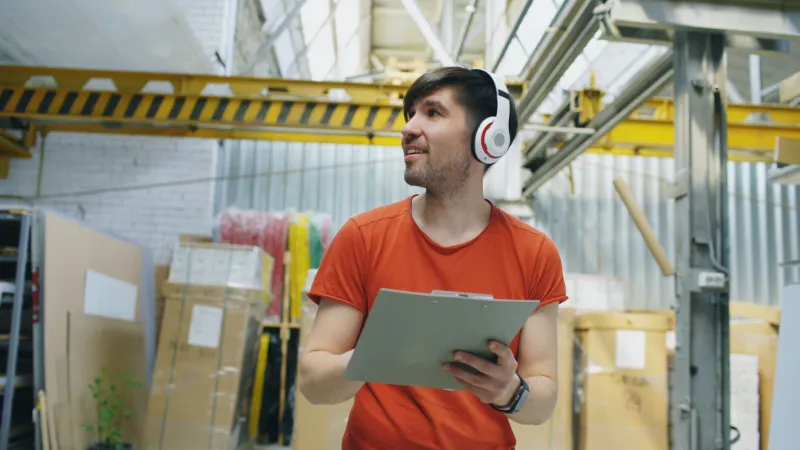
The burning smell was faint — barely noticeable above the ambient noise of a mid-sized packaging plant in northern Ohio. It lasted perhaps three seconds before the ventilation system carried it away. A sensor array mounted twenty feet overhead registered nothing unusual. But the facility manager walking his morning rounds stopped, turned, and immediately located the source: an overheating motor bearing on a conveyor drive unit, one that would have seized entirely within the next four to six hours.
The repair took forty minutes. The alternative — an unplanned line shutdown during peak production — would have cost the operation somewhere between $80,000 and $120,000 in lost throughput and emergency service fees.
No software flagged the problem. No dashboard lit up. A person caught it.
The Limits of Sensor-Driven Monitoring
Predictive maintenance technology has advanced considerably over the past decade. Vibration sensors, thermal imaging cameras, acoustic emission detectors, and machine learning algorithms now monitor industrial equipment with a precision that would have seemed extraordinary twenty years ago. Plant managers across the country have invested heavily in these systems, and the data suggests those investments pay dividends — in the right circumstances.
But sensors have boundaries. They measure what they are configured to measure, at the intervals they are programmed to check, within the physical range they are positioned to cover. A bearing that begins to fail in a way that produces an unusual odor rather than a detectable vibration spike may not trigger any automated alert until the failure is already advanced. A subtle change in the acoustic signature of a pump — one that an experienced technician would recognize immediately — can fall below the threshold of a system calibrated to filter out background noise.
More critically, sensors cannot contextualize. They cannot notice that a particular machine sounds different today than it did last Tuesday, or that the smell now drifting across the floor is inconsistent with current production conditions. That kind of pattern recognition requires something sensors fundamentally cannot replicate: accumulated, embodied experience.
What Veteran Operators Actually Detect
Ask a facility manager with fifteen or more years on the floor what they rely on during a walk-through, and the answers are consistent. Smell comes up first, nearly every time.
Electrical insulation degrading under heat produces a distinctive sharp, acrid odor. Overheating hydraulic fluid smells different from burning rubber, which smells different again from a lubrication breakdown in a gear assembly. These distinctions are not subtle to someone who has encountered each one multiple times. They are as recognizable as the difference between coffee and diesel fuel.
Sound is the second major indicator. Cavitation in a pump, a developing crack in a rotating shaft, a loose fastener vibrating at harmonic frequency — each produces a signature that changes gradually as a fault progresses. Experienced maintenance professionals describe knowing a machine's "normal" sound the way a musician knows when an instrument is out of tune. The deviation is immediately apparent, even if it is difficult to articulate in precise technical terms.
Vibration perceived through the hands or feet — transmitted through a floor, a railing, or a piece of equipment — rounds out the primary sensory toolkit. A machine that has developed an imbalance will communicate that imbalance to anything it touches. A person walking past a piece of equipment and resting a hand briefly on its housing can detect changes in vibration character that may not yet appear in sensor data.
Building Institutional Sensory Knowledge
The challenge facing many American industrial operations today is the transfer of this knowledge. As experienced technicians and facility managers retire, they take with them decades of accumulated sensory calibration that cannot be downloaded into a database or captured in a standard operating procedure.
Some facilities are beginning to address this through structured mentorship programs that explicitly pair newer technicians with senior staff for extended walk-through rotations. The goal is not merely to show junior employees what to look for, but to develop the baseline familiarity with normal operating conditions that makes deviations detectable. This takes time — most experienced operators estimate it requires at least two to three years of consistent exposure before a technician develops reliable sensory intuition on a given piece of equipment.
Others are experimenting with documentation approaches that attempt to capture sensory benchmarks: audio recordings of equipment under normal operation, thermal images taken at consistent intervals, written descriptions of expected odor profiles during specific production runs. These tools cannot replicate the experience of being present, but they create reference points that support newer team members.
Sensors and Senses Together
The most effective industrial maintenance programs in the United States today are not choosing between technology and human expertise. They are integrating both deliberately.
In this model, automated monitoring systems handle continuous baseline surveillance — tracking vibration signatures, temperature gradients, and power consumption around the clock. Human inspectors then perform structured walk-throughs calibrated to catch what sensors miss: the early-stage anomalies that present first through smell or sound, the contextual irregularities that require judgment rather than measurement, and the equipment interactions that no individual sensor is positioned to observe.
This layered approach reflects a mature understanding of what each method does well. Sensors excel at consistency and scale. Experienced facility personnel excel at interpretation, context, and the detection of novel failure modes that fall outside any sensor's programmed parameters.
The Walk That Protects the Operation
There is nothing glamorous about a facility manager's morning rounds. The walk typically happens before most of the administrative staff arrives, in conditions that are often loud, warm, and physically demanding. It is methodical, repetitive, and — to the untrained observer — unremarkable.
But that walk is, in many facilities, the single most valuable thirty minutes of the operational day. It is the interval during which a trained human being applies the full range of biological sensing capability to an environment that automated systems can only partially observe.
The sensor array in that Ohio packaging plant was functioning exactly as designed. It simply wasn't designed to smell. The facility manager was. And on that particular morning, in that particular corner of the floor, that made every difference.
In the ongoing conversation about the role of technology in industrial operations, it is worth remembering that the most sophisticated monitoring system on any job site is still the experienced professional who has spent years learning to read a facility the way a physician reads a patient. No software update closes that gap. No sensor placement eliminates the need for the person who knows what normal sounds like — and recognizes, immediately, when it doesn't.