Before the Ground Moves: How Erosion Control Specialists Race the Spring Thaw to Save Construction Sites
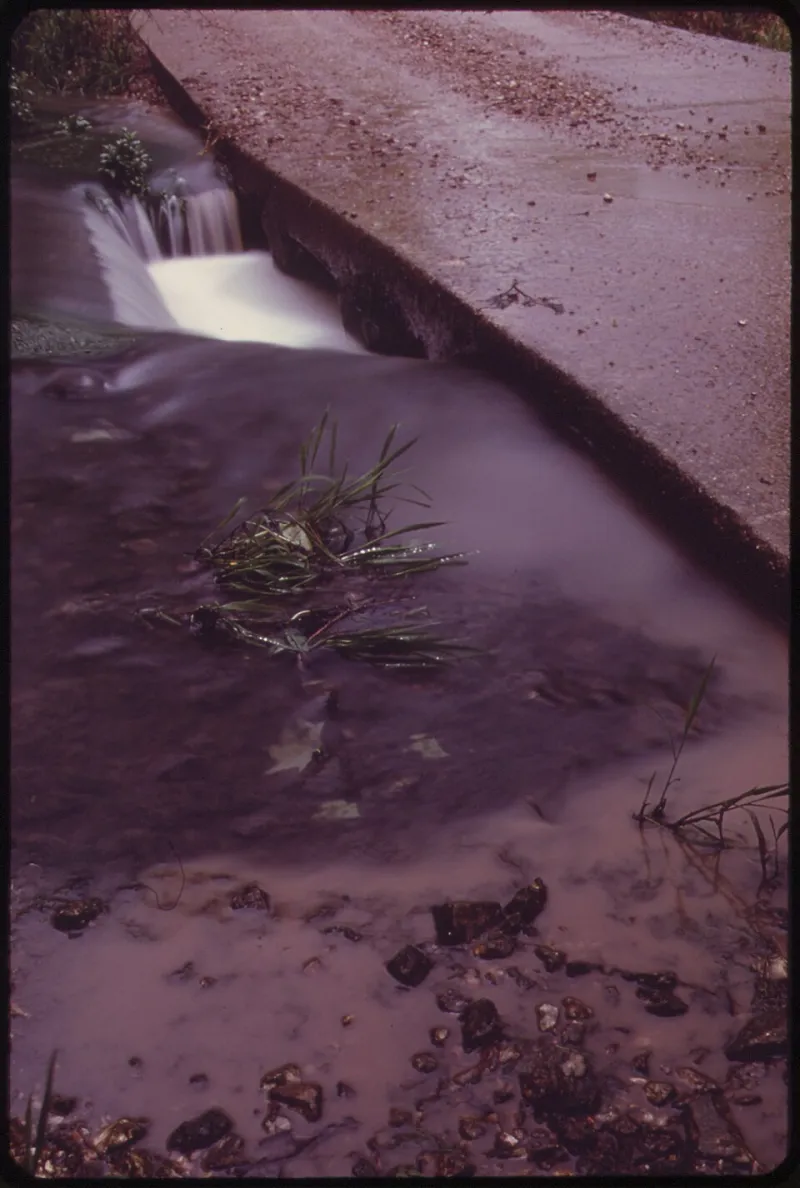
Photo: Bill Kuykendall, Public domain, via Wikimedia Commons
There is a moment in late February or early March, depending on where you are in the country, when the ground stops being solid. It happens gradually, then all at once. Frost retreats from the upper soil layers, snowmelt begins saturating the ground from above, and construction sites that looked stable in December begin to shift in ways that no blueprint anticipated. For erosion control crews, that moment is not a surprise. It is the event they have been preparing for since the previous fall.
These specialists operate in a discipline that sits at the intersection of hydrology, soil science, and field logistics. Their work is not glamorous. It does not generate headlines. But the projects they protect — commercial developments, highway expansions, utility corridors, and residential subdivisions — represent hundreds of millions of dollars in active investment. When erosion control fails, the losses are swift and compounding.
Reading the Land Before the Weather Arrives
Experienced erosion control technicians do not wait for rain events to begin their assessments. Site evaluation begins well in advance of the thaw, often during late-winter site walks when frozen ground still provides stable footing. What crews are looking for at that stage is topography: where water will concentrate, where existing drainage structures may be undersized, and where disturbed soil has been left exposed through the winter months.
"The site tells you what it's going to do if you know how to look at it," said one field supervisor with more than fifteen years managing erosion and sediment control operations across the Mid-Atlantic and Southeast. "Elevation changes, compaction from equipment traffic, proximity to stormwater inlets — all of that maps out the risk before a single drop of rain falls."
Soil composition plays an equally important role. Sandy soils drain quickly but offer little structural cohesion when saturated. Clay-heavy soils can hold moisture for weeks after a rain event, creating extended instability windows that delay grading and paving operations. Silty soils — common in river valleys and floodplain-adjacent developments — present some of the highest erosion risks because fine particles travel easily in moving water and can clog drainage infrastructure at a significant distance from the original disturbance.
The Equipment Window
One of the least-discussed challenges of spring erosion control is the logistical constraint of deploying heavy equipment on saturated ground. Silt fences, sediment basins, rock check dams, and erosion control blankets all require installation — and most of that installation involves machinery. Tracked equipment distributes weight more effectively than wheeled alternatives, but even tracked machines can cause damaging rutting when ground moisture exceeds certain thresholds.
Crew supervisors must therefore sequence their deployments carefully. The first dry days after the initial thaw are critical. There is typically a brief period — sometimes as short as forty-eight to seventy-two hours — when the ground has firmed enough for equipment access but before the next precipitation cycle arrives. Missing that window can mean waiting another week or more, during which an unprotected site remains fully exposed.
This is where weather literacy becomes a professional skill. Experienced crews monitor National Weather Service forecasts, study soil moisture data from regional agricultural extension services, and maintain direct communication with site project managers. Decisions about when to mobilize are not made by calendar. They are made by reading a combination of environmental signals that no algorithm fully replicates.
The Regulatory Dimension
Beyond the physical risk to the site itself, erosion control failures carry regulatory consequences that project owners cannot afford to ignore. Under the Clean Water Act, construction sites disturbing one or more acres of land are required to obtain a National Pollutant Discharge Elimination System permit and implement a Stormwater Pollution Prevention Plan. State environmental agencies enforce these requirements with varying degrees of aggressiveness, but fines for sediment discharge violations are not uncommon — and stop-work orders are a real operational risk.
Erosion control crews, in this context, are not simply protecting dirt. They are protecting a project's legal standing to continue operating. A single significant sediment release into an adjacent waterway can trigger regulatory scrutiny that delays construction timelines by weeks and generates legal costs that dwarf the price of proper prevention.
Adaptation on the Fly
No erosion control plan survives contact with an actual spring thaw completely intact. Conditions change faster than specifications can be updated, and field crews must make real-time decisions that their plans did not anticipate. A berm that was adequate for a five-year storm event may be overwhelmed by a sustained three-day rain. A sediment trap that was properly sized in October may have partially filled over the winter and require emergency cleanout before it can function.
The crews who perform best in these situations are those with deep enough field experience to improvise within the bounds of effective practice. That might mean repositioning silt fence runs after observing actual water flow patterns, adding temporary rock pads at new equipment access points, or installing emergency outlet protections around inlets that were not on the original plan.
"The plan is your starting point, not your ceiling," noted one project manager who oversees erosion control operations on large commercial grading contracts in the Carolinas. "The field is always going to show you something the engineer didn't see from the office."
The Cost of Inaction
For project owners and general contractors who view erosion control as a compliance checkbox rather than a strategic priority, the spring thaw provides an annual lesson in what that attitude actually costs. Topsoil loss from a single major rain event on an unprotected site can require thousands of dollars in imported fill to remediate. Sediment that reaches a public road or waterway may require emergency cleanup that falls entirely on the project owner. Grading operations that must be redone after washout events add weeks to schedules that were already tight.
The erosion control specialists who manage these risks successfully do so through a combination of preparation, technical knowledge, and the kind of field judgment that only develops over years of working directly with land and weather. Their value is not visible in the finished project — precisely because, when they do their job well, nothing goes wrong.
That invisibility is both the challenge and the nature of ground-level expertise. The best outcomes leave no trace.