The Moving Perimeter: Inside the Crews Who Redraw a Work Zone Every Hour
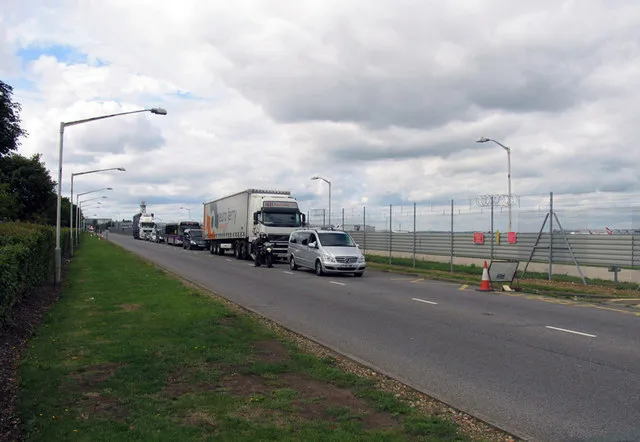
Photo: Andrew Tatlow , CC BY-SA 2.0, via Wikimedia Commons
At 6:12 on a weekday morning, a two-lane arterial is already backing up. A utility crew has opened the eastbound curb lane, and the temporary traffic control team is not waiting for the first complaint. They are walking the taper, checking sight lines, and moving an arrow board a few feet to the left. For the next ten hours, the cone zone is their command room.
A Plan That Begins With the Driver
Every temporary traffic control setup starts with a drawing. Federal and state manuals define taper lengths, advance warning distances, buffer spaces, and channelization for different speeds and work durations. Those standards matter. They are also only the baseline.
Field crews know that a plan is read at highway speed, not at a desk. They watch how drivers approach the closure, where they merge late, whether trucks clip the taper, and whether a driveway or intersection creates a trap. A pattern that works at 9 a.m. may fail at 3 p.m. when school traffic and delivery trucks arrive at the same time. The crew's job is to make the work zone legible before a driver has to guess.
The First Fifteen Minutes
Deployment is choreography. Signs go first. Then the arrow board, the buffer, the taper, and the cones. Crews check that advance warning is visible around a curve, that the work area has an escape path, and that emergency vehicles can still get through. They coordinate with the superintendent, the utility foreman, and sometimes local police.
A cone pattern is a contract with drivers: clear, consistent, and credible. When drivers believe the closure, they merge early. When they do not, they intrude. The best crews revise before the first near miss, not after.
When the Pattern Has to Change
By midmorning, the queue may spill into an intersection. A delivery truck may clip a cone. A resident may need access to a driveway that the original plan blocked. The crew shortens the work area, adds a flagger, shifts the taper, or opens a temporary access point. These are split-second calls made under pressure.
Schedule pressure is real. Paving crews, utility contractors, and inspectors all have work to finish. But the traffic control crew has authority to pause work when the pattern stops protecting people. That authority is not obstruction. It is risk management in its most visible form.
Keeping the Schedule Alive
Traffic control is often blamed for delay, yet good crews are often the reason a job stays alive. They maintain access for businesses, garbage trucks, mail carriers, and emergency responders. They document setups and changes. They reset the zone for overnight work and return before dawn to do it again.
Weather, traffic volumes, and driver behavior change by the hour. The crew reads all three. The cone zone may look temporary, but the judgment behind it is permanent. It is the difference between a work site that moves traffic safely and one that becomes a daily hazard.
The Ground-Level View
From the outside, the job looks like cones and signs. From the ground, it is a moving perimeter of decisions. The crews who manage it are not decoration around the work. They are the reason the work can happen at all.