Two Degrees From Disaster: The Field Technicians Who Keep Cold Chain Cargo From Becoming a Recall
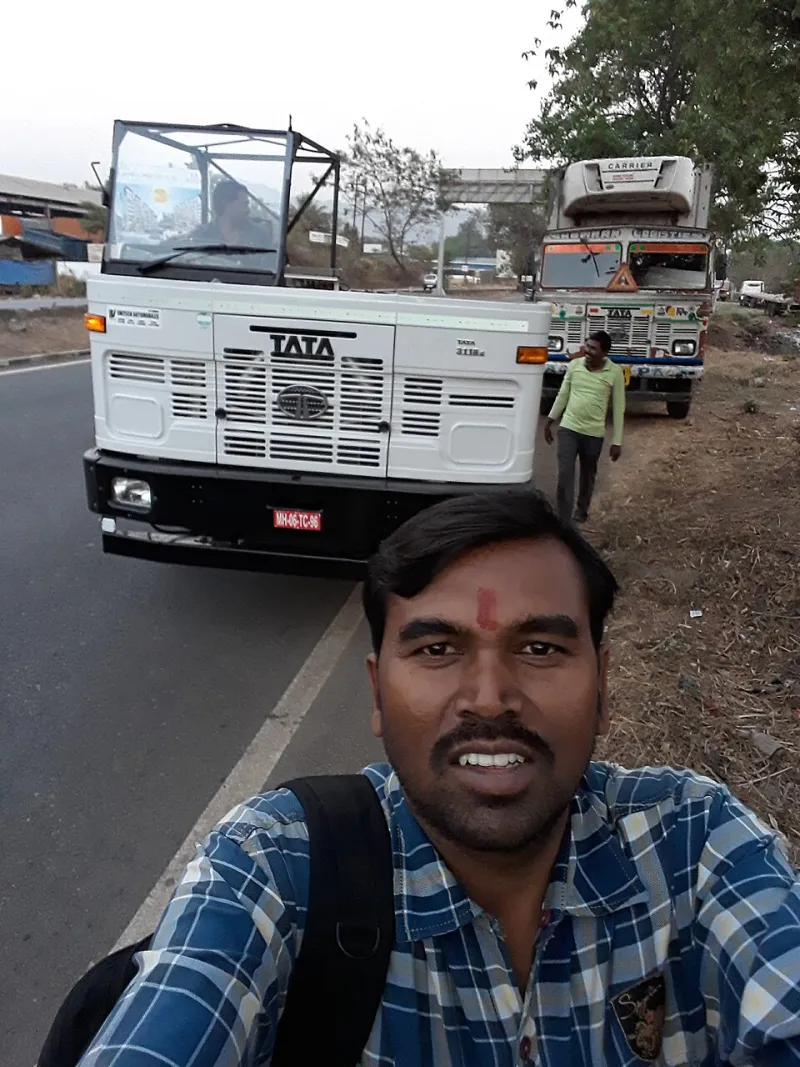
Photo: Therupeshbharti, CC BY-SA 4.0, via Wikimedia Commons
A refrigerated trailer is a simple idea with a complicated job. It must hold a temperature range across a long distance, through traffic, weather, and door openings, while the cargo inside may be worth more than the truck and trailer combined. When the unit fails, the problem is not only mechanical. It is a clock. Every hour the cargo sits outside its range narrows the options for the shipper, the carrier, and the receiver.
The Alarm Is Only the Beginning
A reefer unit can alarm for many reasons. A high-temperature alert may point to a failing compressor, a refrigerant leak, a blocked evaporator, a faulty sensor, or a door that was left open too long. The technician's first task is not to replace parts. It is to separate the symptom from the cause.
Field diagnostics begin with the data. Modern reefer units log set points, return-air and supply-air temperatures, defrost cycles, and fault codes. A technician reads that history the way a mechanic reads an engine. A temperature spike that lasts four minutes during a defrost cycle is normal. A slow drift over several hours is not. The pattern matters as much as the number.
Diagnostics at the Dock and on the Shoulder
Cold chain service happens in two very different environments. At a dock, the technician may have power, light, tools, and access to the trailer. On the shoulder of an interstate, the same technician may be working in the dark with traffic passing a few feet away. Both settings demand the same discipline: confirm the complaint, check the obvious, and avoid making the situation worse.
The obvious checks are not glamorous. Is the unit in the correct mode. Is the set point what the shipper requested. Is the fuel level adequate for the next leg. Are the condenser and evaporator coils clear. Is the door seal intact. Has the trailer been pre-cooled properly. A surprising number of temperature events are not failures at all. They are operating errors, loading errors, or communication errors between the shipper and the driver.
When the problem is mechanical, the technician moves into component-level diagnosis. Refrigerant pressures, compressor amp draw, fan operation, and sensor readings all feed the decision. The goal is not simply to make the unit run. It is to make it hold temperature reliably for the remainder of the route. A repair that gets the unit running but leaves it unable to recover after a door opening is not a repair. It is a delay.
The Forensic Side of Temperature Logs
Cold chain disputes are often settled with data. Temperature loggers, telematics, and reefer controllers create a record of what happened and when. The field technician may be asked to explain that record after the fact. Why did the temperature rise between mile markers. Why did the unit cycle differently after the driver stopped for fuel. Why does the log show a door opening when the driver says the door was closed.
That forensic work requires patience. A logger may record at intervals that miss a short spike. A sensor may be placed in a location that does not represent the cargo. A door switch may be misaligned. The technician learns to treat the log as evidence rather than gospel. The data tells a story, but the story has to be checked against the equipment and the physical evidence.
When the Cargo Is Medicine
Food safety gets most of the attention in cold chain conversations, but pharmaceutical and medical cargo raise the stakes in a different way. A vaccine or biologic may have a narrow acceptable range and a documented stability profile. A temperature excursion does not always mean the product is ruined, but it does mean someone has to evaluate it. The field technician's role is to preserve the evidence: the set point, the alarm history, the ambient conditions, and the repair record.
That is why cold chain field service is often described as a documentation job as much as a mechanical one. The technician who arrives at a breakdown is not only fixing a refrigeration unit. They are helping to establish whether the cargo can be released, quarantined, or rejected. The quality of their notes can matter as much as the quality of the repair.
The 24/7 Field Discipline
Reefer failures do not wait for business hours. A trailer loaded with produce may be sitting at a distribution center when the unit faults. A pharmaceutical shipment may be halfway across the country when the temperature alarm triggers. The field service network that responds to those events is built on dispatch, mobile technicians, and a parts supply chain that has to reach the truck wherever it is.
The work is hard on schedules and hard on people. Technicians spend long hours on the road, often in poor weather, often at night. The best ones develop a kind of triage discipline. They know which failures can be managed with a temporary fix and which require a replacement unit. They know when to recommend transloading the cargo to another trailer. They know that the cheapest repair is not always the right one when the cargo is perishable or regulated.
Why the Least Glamorous Technician Matters
Cold chain field service does not produce many headlines. It produces uneventful deliveries. A trailer arrives at a grocery distribution center with its temperature history intact. A pharmacy receives a shipment that never left its range. A produce load reaches the market without a recall notice. Those outcomes are the product of ordinary repairs, careful documentation, and technicians who understand that a two-degree drift is not a minor inconvenience.
The least glamorous technician on the road is often the one holding the line between a normal day and a public health event. That is not an exaggeration. It is the nature of a business where the cargo is alive, perishable, or medically sensitive, and the field is the only place where the problem can be found.