Before the Ribbon Cuts: What Building Commissioning Agents Discover While the Paint Is Still Drying
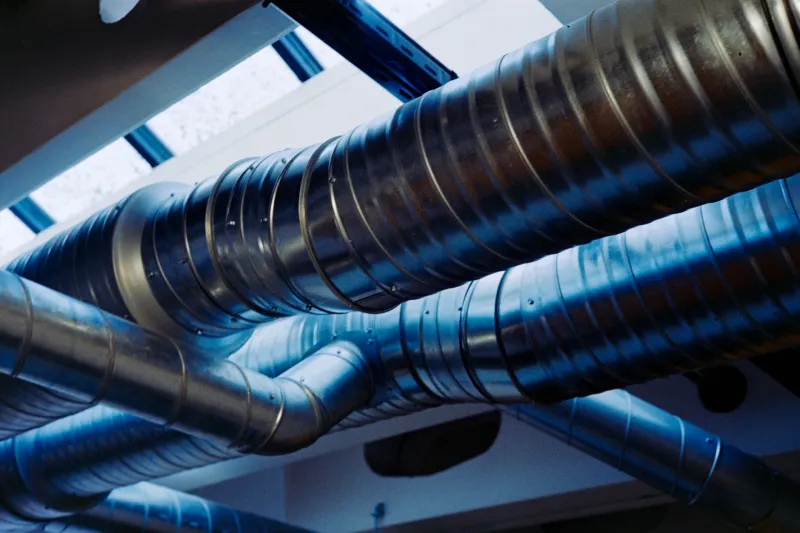
There is a particular kind of silence that settles over a newly completed commercial building before its occupants arrive. The HVAC systems hum at a low register. The lighting controls cycle through their programmed sequences. The fire suppression infrastructure sits pressurized and ready. To a casual observer, the building appears finished. To a commissioning specialist, it is a system waiting to be interrogated.
Building commissioning—the structured process of verifying that a facility's mechanical, electrical, plumbing, and control systems perform according to the owner's project requirements—is among the least visible and most consequential activities in the construction lifecycle. The professionals who conduct it occupy an unusual position: they arrive after the designers have left and before the operators have settled in, carrying a responsibility that belongs entirely to the transition between those two worlds.
The Space Between Design Intent and Installed Reality
Every commercial building begins as a set of intentions. The mechanical engineer specifies airflow rates and temperature setpoints. The electrical engineer designs a load distribution scheme. The controls contractor programs sequences of operation into the building automation system. On paper, these elements form a coherent whole. In the field, they meet the realities of installation tolerances, substituted equipment, field modifications, and the accumulated improvisation of a construction schedule under pressure.
Commissioning agents—often referred to as CxAs—are trained to find where the gap between intention and installation has opened. Their work begins during the design phase on projects that follow enhanced commissioning protocols, reviewing submittals and specifications for coordination conflicts before they become field problems. But the most critical work happens in the building itself, with instruments in hand and systems under load.
A damper actuator installed with reversed polarity. A variable air volume box that responds to its control signal but delivers the wrong airflow because the calibration was never verified. A chiller that starts correctly but short-cycles under partial load because the sequence of operation doesn't account for a specific condition the designer anticipated but the programmer missed. These are not hypothetical scenarios. They are the kinds of findings that experienced commissioning agents encounter regularly, on projects of every scale and budget.
Testing as Translation
The commissioning process involves functional performance testing—a systematic verification that each piece of equipment and each integrated system responds correctly across its full operational range. This is not the same as a construction inspection, which confirms that work was installed per drawings. Functional testing confirms that the installed system actually does what it was meant to do, under conditions that approximate real-world use.
For a large commercial office building, this might involve testing hundreds of terminal units, verifying the response of the building automation system to dozens of fault conditions, and measuring actual airflow against design values at every point in the distribution network. For a data center or pharmaceutical manufacturing facility, the stakes—and the complexity—are substantially higher. A single misconfigured cooling sequence in a data center can trigger a cascade of thermal events that takes equipment offline. A cleanroom HVAC system that fails to maintain proper pressure differentials can compromise product integrity and regulatory compliance simultaneously.
Commissioning agents conducting these tests are not following a rote checklist. They are reading the building's behavior and interpreting what they observe against a detailed understanding of how the system was designed to function. When something unexpected occurs—a sensor reading that doesn't track the physical condition it's supposed to measure, a control loop that hunts rather than stabilizes—the experienced CxA recognizes it, documents it precisely, and traces it to its source.
The Lifecycle Argument
The business case for rigorous commissioning has been articulated in the research literature for years. A widely cited study by Lawrence Berkeley National Laboratory found that commissioning new commercial buildings produces a median energy savings of approximately 15 percent, with a median simple payback of 4.2 years. For existing buildings undergoing retrocommissioning, the economics are frequently more compelling still.
But the financial argument extends beyond energy. Systems that are properly commissioned at the outset require less corrective maintenance in the years that follow. Operators who receive thorough systems documentation and training—both standard commissioning deliverables—are better equipped to manage the building efficiently over its service life. Tenant complaints related to thermal comfort, air quality, and lighting performance are reduced. And the organizational friction that accompanies a troubled building startup—the service calls, the warranty disputes, the productivity losses—is largely avoided.
For building owners and facility managers, the commissioning agent's report is one of the most operationally useful documents they will ever receive. It describes the building as it actually exists, not as it was designed to exist. That distinction matters enormously when the first winter comes and the heating system is asked to perform under real conditions for the first time.
What Experience Looks Like in Practice
Building commissioning is a discipline that rewards accumulated field exposure in ways that formal credentialing alone cannot replicate. The ASHRAE Commissioning Process Management Professional credential and the Building Commissioning Association's Certified Commissioning Professional designation establish baseline competency. But the ability to recognize an anomalous trend in a BAS data log, to hear a piece of equipment behaving in a way that doesn't match its specification, or to anticipate how a control sequence will fail under an edge-case condition—that comes from years of working through problems in real buildings.
The best commissioning specialists describe their role in terms that sound less like technical inspection and more like systems thinking applied under time pressure. They are, in effect, translating the building's early behavior into operational intelligence that will serve the owner for decades. Their findings, captured in the commissioning report and the issues log, constitute a record of the building's actual condition at the moment it enters service.
That record is the foundation everything else is built on. And it exists only because someone was on the ground, testing, observing, and asking the questions that blueprints cannot answer.